
 27 August 2026
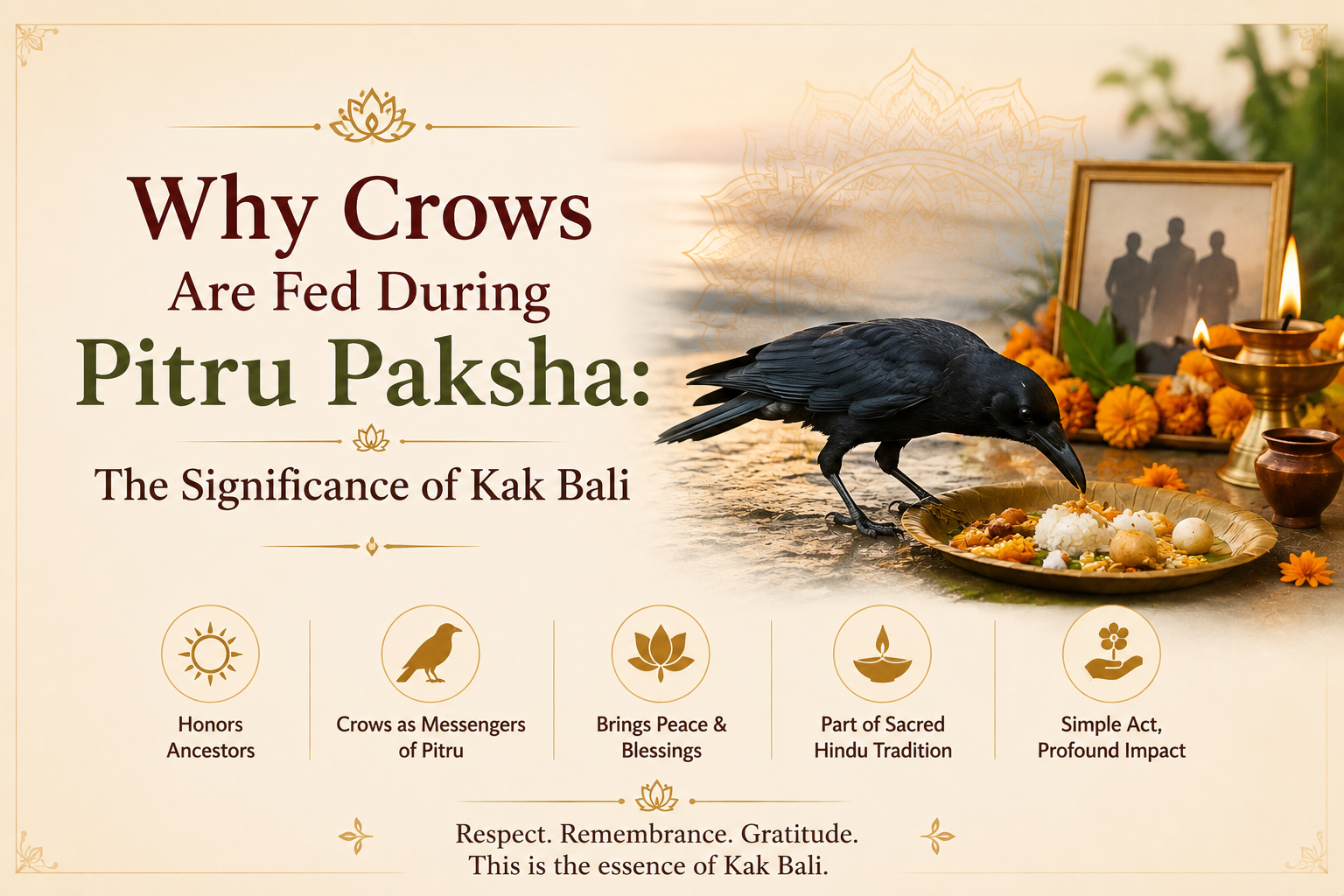
The crow holds a special place in Pitru Paksha because tradition regards it as the messenger of the ancestors, the being through which offerings made in this fortnight are believed to reach the departed. The practice of setting aside a portion of the shradh food for the crow is known as Kak Bali or Kagwal, and in many families it is considered the moment that confirms the offering has been accepted. This article explains why the crow carries this role, what the practice involves, and what it means when the crow does or does not come.
Why the Crow in Pitru Paksha?
The crow occupies an unusual position in our tradition. It is regarded as a bird that moves between worlds, carrying messages between the living and the departed, and this is the basis of its role during Pitru Paksha. When food is offered in the name of the ancestors, a portion is placed for the crow, and the belief is that the offering reaches the pitrus through it.
The Ramayana carries an episode often cited in this connection, in which Jayanta, the son of Indra, took the form of a crow. In the Puranic accounts associated with the crow, the bird is granted a place in ancestral offerings, and from this the practice of Kak Bali is traditionally traced.
What Is Kak Bali or Kagwal?
During the shradh, after the food has been prepared and before the family eats, portions are set aside on a leaf or plate and placed outside for specific animals. In most traditions this includes:
- The crow (kak), regarded as the messenger of the ancestors
- The cow (go), held sacred and associated with the deities
- The dog (shwan), associated with Yama, the lord of the departed
In some traditions a portion is also set aside for ants and for the fire. Together these offerings are known as Panchabali in certain regional practices, and Kagwal in North India. The food offered is the same simple sattvic preparation made for the shradh: rice, dal, vegetable, and kheer.
What It Means When the Crow Comes
Families watch for the crow with genuine feeling. When a crow arrives and eats the offering, it is traditionally taken as a sign that the ancestors have accepted the shradh and are content. There are households where the family will wait patiently, and the arrival of the crow brings a visible sense of relief and completion.
When the crow does not come, families sometimes read it as a sign of some wish of the ancestors remaining unfulfilled, and may pray again or make an additional offering. It is worth holding this gently. The absence of a crow can equally mean that there are simply few crows in that locality, and the tradition’s deeper teaching is that sincerity of the offering matters more than the sign. An offering made with faith is complete whether or not a bird arrives to take it.
The Wisdom Within the Practice
There is a quiet ecological wisdom in this custom worth noticing. Our tradition built into its most solemn ritual an instruction to feed the crow, the cow, the dog, and the ants, creatures that live alongside human settlements and depend on what we leave behind. A rite dedicated to those who have departed begins by feeding the living beings around us.
This connects to the wider principle of the fortnight. Anna Daan, the giving of food, is central to Pitru Paksha, and it extends from the crow at the doorstep to the person in need at the gate. The tradition holds that what is given in the name of the ancestors reaches them through the act of giving itself.
A Practical Note
Urban households often find that crows are far fewer than they once were, and this troubles many families. Where no crow comes, the offering may be placed where birds and animals can reach it, or given to a cow, or offered to a person in need. Priests familiar with family traditions generally advise that the intention and the act of giving carry the offering, and that a family should not be distressed if a bird does not appear.
Frequently Asked Questions
Why are crows fed during Pitru Paksha?
The crow is regarded in tradition as the messenger of the ancestors, a bird that moves between the world of the living and the departed. A portion of the shradh food is set aside for it in the belief that the offering reaches the ancestors through the crow.
What is Kak Bali?
Kak Bali, also called Kagwal, is the practice of setting aside portions of the shradh food for the crow, and in most traditions also for the cow and the dog, before the family eats. In some regions offerings for ants and fire are included as well, together called Panchabali.
What does it mean if a crow eats the Pitru Paksha offering?
It is traditionally taken as a sign that the ancestors have accepted the shradh and are content. Many families wait for the crow’s arrival as the completion of the ritual.
What if no crow comes to eat the offering?
Some families read this as an unfulfilled wish of the ancestors and offer additional prayers. However, it may equally reflect that there are few crows in the area. The tradition holds that sincerity matters more than the sign, and the offering may be placed where other birds or animals can reach it, or given to someone in need.
Which animals are fed during Pitru Paksha?
The crow, the cow, and the dog are the three most commonly honoured, associated respectively with the ancestors, the deities, and Yama. Some traditions also set aside portions for ants and for the fire.