

 3 August 2026
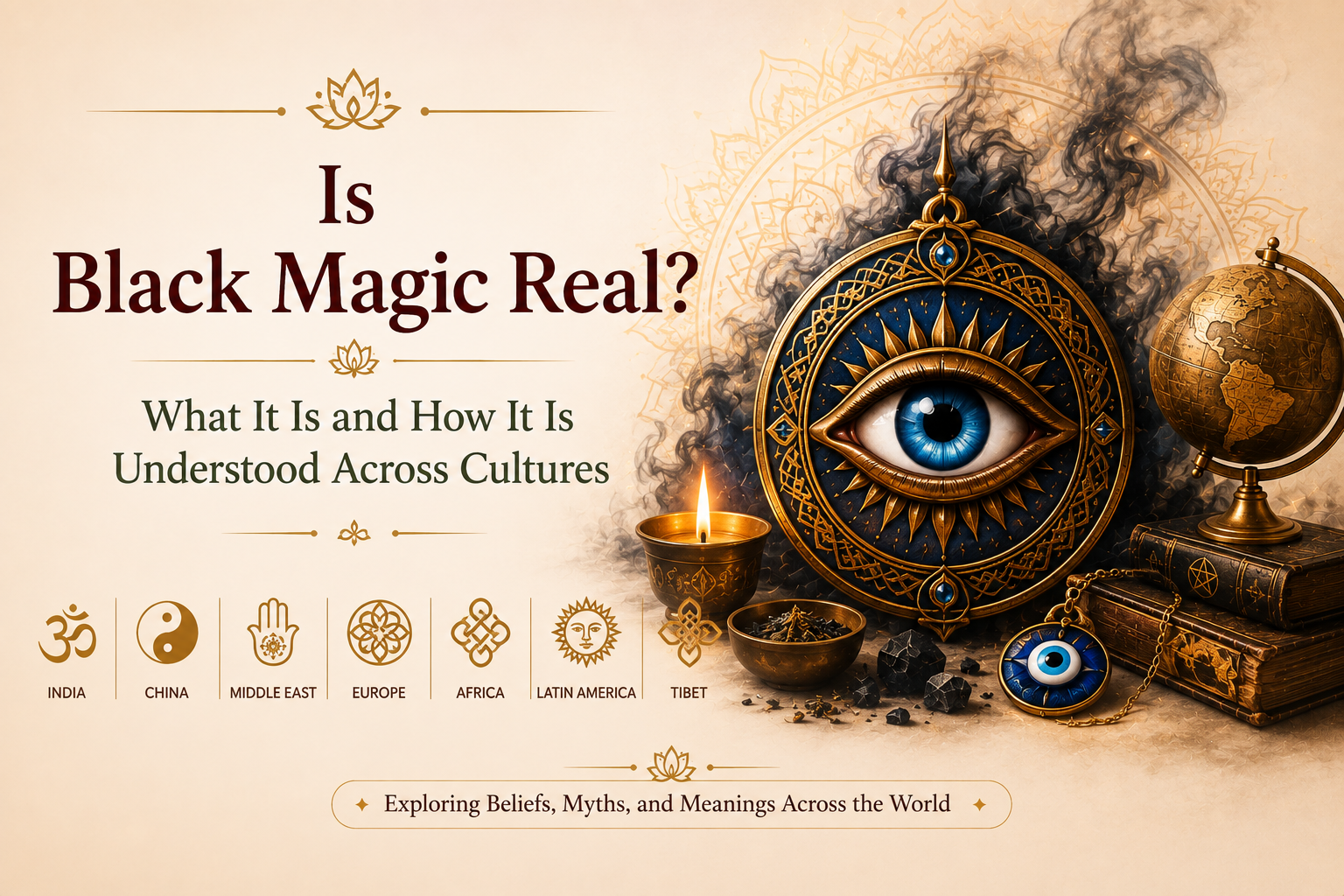
Is black magic real? This is one of the most searched questions on the subject, and the honest answer is that it depends entirely on what one means by “real.” Black magic exists as a belief system, a cultural practice, and a psychological phenomenon documented across nearly every human society in recorded history. Whether it holds literal supernatural power is a question of personal faith, religious tradition, and worldview that no article can settle for you. What this guide can do is explain clearly what black magic is, how black magic is believed to work, why the belief has persisted for thousands of years, and how different traditions and skeptics alike understand it. This is an informational overview, not a claim about what is or is not true.
What Is Black Magic?
Black magic is the popular term for the alleged use of supernatural powers or rituals for harmful, selfish, or malevolent purposes. In most traditions, the word describes practices intended to harm, control, manipulate, or take revenge on another person, as distinguished from so-called “white magic,” which is framed as protective or benevolent. The distinction between the two is drawn by intention rather than by technique.
Across cultures, what people call black magic goes by many names: kala jadu in South Asia, sihr in the Islamic tradition, sorcery or witchcraft in European history, and various local terms in African, Caribbean, and East Asian folk traditions. The specific rituals differ enormously, but the underlying idea is remarkably consistent: the belief that a practitioner can, through hidden means, influence the fortunes, health, relationships, or mind of a target without physical contact.
It is worth stating plainly that “black magic” is a folk category, not a scientific one. There is no scientific evidence that supernatural forces can be directed to harm someone at a distance, and mainstream science treats such claims as unproven. At the same time, the belief itself is very real in its social and psychological effects, which is a large part of why the topic remains so widely discussed.
Does Black Magic Exist? Separating the Question Into Parts
The question “does black magic exist” actually contains several different questions, and separating them helps clarify the discussion:
- Does the practice exist? Yes, unquestionably. People perform rituals they describe as black magic in many parts of the world, and the practice is documented by anthropologists, historians, and religious scholars.
- Does the belief exist? Yes, and it is ancient and near-universal. Surveys in many countries show that a significant share of people believe black magic is real.
- Does it have literal supernatural power? This is the contested part. Religious traditions vary in their positions, skeptics and scientists say there is no verifiable evidence, and believers point to personal experience. This is a matter of faith and worldview, not settled fact.
So when people ask “does black magic really exist” or “is black magic true,” the most accurate response is that the practice and the belief are undeniably real, while the supernatural mechanism remains a question of faith that lies outside what science can confirm.
How Black Magic Is Believed to Work
Different traditions describe how black magic works in different ways, but several recurring elements appear across cultures. Understanding these explains how the belief is structured, without endorsing any claim that they function as described.
Rituals and objects
Believers hold that practitioners use specific rituals, chants, or spells, often combined with physical objects, to direct intention toward a target. Objects associated with the target, such as hair, a photograph, or a personal belonging, are said in many traditions to strengthen the connection.
Intention and will
A common thread in explanations of how does black magic work is the emphasis on focused intention or ill will. Many traditions hold that the malevolent desire of the person commissioning or performing the act is central to the process.
Invocation of forces or entities
Some traditions describe the practice as invoking spirits, deities, or unseen forces to carry out the intended harm. Others frame it as manipulating a kind of universal energy. The specifics vary widely by culture and religion.
Within the deeper spiritual understanding of many Eastern traditions, a clearer picture is offered. Just as there are benevolent divine energies, there are also said to be negative energies and wandering spirits, souls that have departed the body but not yet attained the light, and remain restless in the subtle realms. It is these unsettled entities, according to this understanding, that a practitioner of black magic is believed to conjure and command. In the Islamic tradition, a comparable role is attributed to the jinn, unseen beings that some practitioners are said to invoke. The essential idea across these traditions is the same: harmful occult practice works not by grand cosmic power but by binding lower, wandering energies to a task and directing them at a target.
The requests made to such forces are, by their nature, unethical ones. A person turns to black magic when they wish to fulfil a desire that cannot be met by fair means, to harm a rival, to force another’s affection or will, to seize by hook or crook what they could not earn, or to take revenge. The intention is almost always to gain something at another’s expense or to cause harm, and the wandering spirits are, in this understanding, the instrument through which such a person tries to make it happen.
Psychological and Social Explanations
Alongside supernatural explanations, researchers in psychology and anthropology offer explanations for why belief in black magic is so persistent and why people report real effects. These perspectives do not require the supernatural to be literally true.
The nocebo effect is frequently cited: if a person genuinely believes they have been cursed, the resulting fear, anxiety, and stress can produce real physical and psychological symptoms, such as insomnia, loss of appetite, or a decline in health. In this framing, the belief itself, not any external force, drives the outcome.
Anthropologists note that belief in black magic often provides explanation for misfortune. When someone faces a string of unexplained troubles, illness, financial loss, or broken relationships, attributing it to black magic offers a narrative and a sense of cause where randomness would otherwise leave a painful void.
Sociologists point to how such beliefs can reflect social tensions, with accusations often arising within communities during periods of conflict, jealousy, or competition. The history of witch trials in Europe and elsewhere is frequently studied in this light.
Why the Belief Has Persisted for Thousands of Years
Belief in black magic appears in some of the oldest written records of humanity, from ancient Mesopotamian tablets to Vedic texts to medieval European manuscripts. Its endurance is itself a subject of scholarly interest. Several factors are usually offered: the universal human experience of unexplained suffering, the deep-seated desire to find cause and agency behind misfortune, the reinforcing power of cultural and religious tradition, and the genuine psychological effects that make the belief feel self-confirming to those who hold it.
Whether or not one accepts the supernatural claims, the persistence of the belief across every inhabited continent and nearly every era is a real and documented feature of human culture.
Is Black Magic Bad? A Question of Intention and Ethics
When people ask “is black magic bad,” they are usually asking an ethical question rather than a factual one. By its common definition, black magic is distinguished from other practices precisely by harmful intent, the wish to hurt, control, or take revenge. On that definition, the intention behind it is what most religious and ethical traditions regard as wrong, independent of whether any supernatural effect actually occurs. Virtually every major faith tradition discourages or condemns practices intended to harm others through occult means, and many condemn the harmful intention itself as the core problem.
How Black Magic Is Viewed by Major Perspectives
To understand the full picture of whether black magic is real, it helps to see how different perspectives approach it:
- Religious traditions generally acknowledge the existence of malevolent occult practices and typically warn against them, while offering their own spiritual frameworks for understanding and responding to them. In the Hindu tradition, for example, the powers of fierce and protective deities such as Hanuman, certain forms of Kali, Karuppaswamy, Madurai Veeran, Devi Baglamukhi, and Devi Pratyangira are traditionally invoked to ward off the effects of black magic and negative forces.
- Scientific and skeptical perspectives hold that there is no verifiable evidence for supernatural harm at a distance, and explain reported effects through psychology, coincidence, and cultural belief.
- Anthropological perspectives study black magic as a real and meaningful cultural phenomenon without ruling on its supernatural truth, focusing on what the belief does within a society.
These perspectives are not always in conflict. Many people hold a religious worldview while also recognising the psychological dimensions that researchers describe.
Frequently Asked Questions
Is black magic real?
Black magic is real as a practice, a belief, and a cultural phenomenon documented across human history. Whether it carries literal supernatural power is a question of faith and worldview, not something science has verified. The practice and the belief are undeniably real; the supernatural mechanism is contested.
What is black magic?
Black magic is the popular term for the alleged use of supernatural powers or rituals for harmful, selfish, or malevolent purposes, distinguished from benevolent practice mainly by its harmful intention. It appears under many names across cultures, such as kala jadu, sihr, and sorcery.
Does black magic exist?
The practice and the belief in black magic exist beyond doubt and are documented worldwide. Whether it has real supernatural power is contested, with religious, scientific, and anthropological perspectives each approaching the question differently.
How does black magic work, according to belief?
Traditions that believe in black magic describe it as working through rituals, spells, objects connected to the target, focused ill intention, and in some cases the invocation of unseen forces or entities. Psychologists additionally point to the nocebo effect, where belief in being cursed can itself produce real symptoms.
Is black magic bad?
By its common definition, black magic is characterised by the intent to harm, control, or take revenge, and most ethical and religious traditions regard that intention as wrong regardless of whether any supernatural effect occurs.
Why do so many people believe black magic is real?
Belief in black magic persists because it offers an explanation for unexplained misfortune, is reinforced by ancient cultural and religious tradition, and produces genuine psychological effects that can make the belief feel self-confirming.
A Note on This Article
This article is intended purely to share knowledge about black magic as a cultural, historical, and psychological subject. It does not claim that black magic has supernatural power, does not diagnose anyone, and does not endorse or recommend any ritual, remedy, or practice. Readers experiencing genuine distress they associate with these beliefs are encouraged to speak with trusted people in their lives and, where appropriate, qualified health professionals.