

 4 August 2026
Many people search for how to know if someone did black magic on you when they are going through a difficult, frightening period and looking for an explanation. This article explains the signs that various traditions associate with black magic, why those same signs almost always have ordinary explanations, and how to think about the question calmly. It is written purely to share knowledge. It does not claim black magic is real, does not diagnose anyone, and strongly cautions against concluding that a specific person has harmed you, which can damage relationships and cause real harm on the basis of fear alone and how to get rid of it.
Why People Ask This Question
The search for how to know who has done black magic usually begins with genuine suffering: a run of misfortune, an illness that resists explanation, a sudden change in mood or fortune. In that vulnerable state, the mind looks for a cause, and in cultures where the belief is common, black magic offers a ready narrative. Understanding this human tendency is the first step to thinking about the topic clearly rather than fearfully.
What Are the Symptoms of Black Magic, According to Belief?
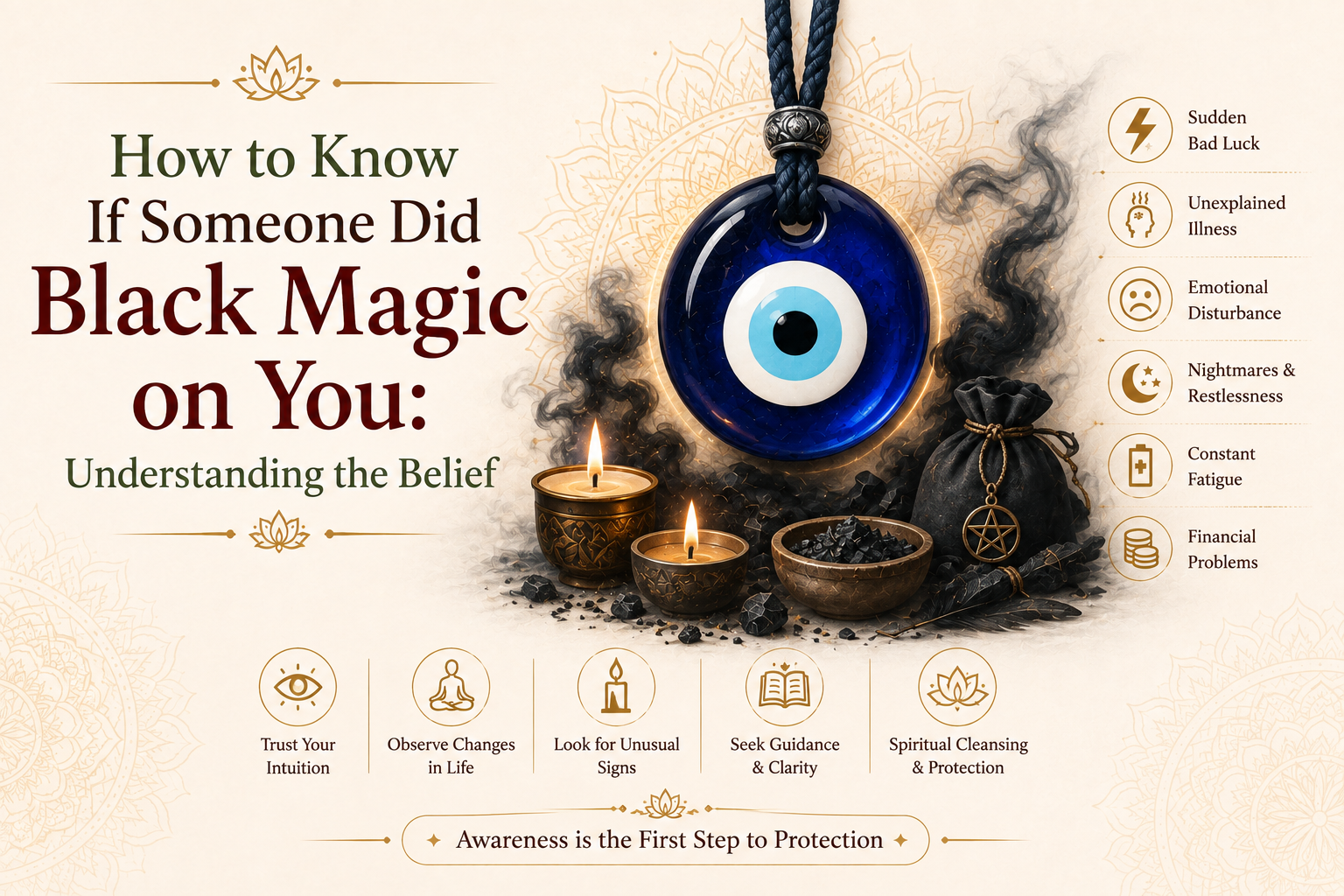
Different traditions list different signs, but the symptoms of black magic that recur across cultural accounts tend to fall into a few groups. They are listed here to explain the belief, with an essential caution that follows immediately after.
- Physical: unexplained fatigue, headaches, disturbed sleep, loss of appetite, or ailments that do not respond as expected to treatment.
- Emotional and mental: sudden anxiety, irritability, low mood, a sense of heaviness, or feeling not oneself.
- Circumstantial: a run of bad luck, repeated obstacles, financial loss, or conflict in relationships.
- Atmospheric: an unsettled feeling at home, recurring bad dreams, or a sense of being watched.
The Essential Caution: These Signs Have Ordinary Causes
Here is the single most important point in any honest discussion of how to know if someone did black magic on you. Every symptom listed above is far more commonly explained by ordinary, well-understood causes. Fatigue, sleep problems, low mood, and anxiety are hallmark signs of stress, depression, and a range of treatable medical conditions. Unexplained physical symptoms warrant a doctor, not a diagnosis of sorcery. Runs of misfortune are, statistically, a normal part of life. Because these signs are so general, they can be made to fit almost anyone at a hard moment, which is precisely why they are unreliable as evidence of black magic and why medical and practical explanations should always be considered first.
Why It Is Harmful to Blame a Specific Person
The question of how to know who has done black magic carries a particular danger worth stating plainly. Concluding that a specific individual, a relative, a neighbour, an ex-partner, a colleague, has cursed you is a serious accusation with no way to be verified. Throughout history, such suspicions have destroyed families, fractured communities, and in the worst cases led to real violence against innocent people accused of witchcraft. No feeling of certainty, however strong, is evidence that a named person has done anything. Traditions at their wisest, and every ethical framework, counsel against acting on such suspicion.
The Psychology of Feeling Cursed
Psychology offers a clear account of why someone may genuinely feel that black magic has been done to them. Once the belief takes hold, confirmation bias leads a person to notice every piece of bad luck as proof while overlooking good fortune. Anxiety produces real bodily symptoms that then seem to confirm the fear. Rumination deepens distress. This is not weakness or foolishness; it is how the human mind responds to fear and uncertainty, and understanding it is often the beginning of relief.
A Calmer Way to Think About It
If you find yourself wondering whether someone has done black magic on you, a grounded approach helps more than a checklist of symptoms. Consider ordinary explanations first, and see a doctor for any persistent physical or emotional symptoms. Talk to people you trust rather than sitting alone with the fear. Be wary of anyone who confirms your fear and then asks for money to remove the curse. And hold on to the fact that feeling cursed, however real the feeling, is not proof of being cursed.
Frequently Asked Questions
How do you know if someone did black magic on you?
Traditions associate signs such as unexplained fatigue, disturbed sleep, anxiety, runs of misfortune, and an unsettled home with black magic. However, every one of these signs is far more commonly caused by stress, medical conditions, or coincidence, so there is no reliable way to know, and ordinary explanations should always be considered first.
What are the symptoms of black magic that people describe?
Commonly described symptoms include physical complaints like fatigue and sleep problems, emotional changes like anxiety and low mood, circumstantial misfortune, and an unsettled atmosphere at home. These symptoms are non-specific and overlap heavily with common stress and health conditions, which is why they cannot confirm black magic.
How can you know who has done black magic?
There is no verifiable way to know that a specific person has done black magic, and concluding so is both unprovable and potentially very harmful. Suspicion is not evidence, and false accusations have historically caused serious damage to individuals and communities. Ethical traditions counsel strongly against blaming a named person.
Why do I feel like someone has cursed me?
Feeling cursed is often explained by the psychology of fear: confirmation bias makes bad events stand out as proof, anxiety creates real physical symptoms, and rumination deepens the distress. These mechanisms can make the feeling powerful and genuine without any supernatural cause being present.
Should I confront the person I suspect?
Acting on an unverifiable suspicion can cause real and lasting harm to relationships and to innocent people, and it does nothing to address the actual source of your distress. Talking to trusted people and, where symptoms affect your health, a qualified professional is a far safer and more helpful path.