

 5 August 2026
How to get rid of black magic is one of the most common questions people ask when they are frightened and searching for answers, so it deserves a careful, honest treatment. This article explains how different cultural and religious traditions approach removing black magic, what actually happens to a person who feels afflicted, and why the fierce protective deities of our tradition are turned to for genuine relief. Alongside the traditional wisdom, we also share what psychology observes, so that the picture is complete rather than one-sided. A word of grounding first: many difficulties people fear are black magic have ordinary causes, so checking those honestly is always the sensible starting point. Where a person’s health is affected, a qualified professional should be part of the picture too.
Understanding the Question Before Seeking to Remove Anything
Before exploring how to remove black magic as various traditions describe it, it is worth pausing on a point that these same traditions and modern psychology both emphasise. Many of the experiences people attribute to black magic, sudden misfortune, persistent anxiety, disturbed sleep, unexplained physical symptoms, have ordinary explanations far more often than not: stress, undiagnosed medical conditions, depression, difficult life circumstances, or simple coincidence. Responsible practitioners in most traditions encourage ruling these out first. Trying to reverse black magic that was never there can delay the real help a person needs, which is why a medical and practical check comes before any spiritual framing in a balanced approach.
How Different Traditions Approach Removing Black Magic
Cultures around the world have developed their own frameworks for what they see as removing or breaking black magic. These are described here to share knowledge of how the belief operates, not as endorsements or recommendations.
Prayer and devotional practice
Across nearly every faith, the most common response to a fear of black magic is turning to prayer, devotion, and one’s own religious tradition. Believers hold that sincere faith and regular worship offer reassurance and a sense of protection, and for many people the psychological comfort of returning to familiar spiritual practice is itself steadying during a frightening time.
Cleansing and purification customs
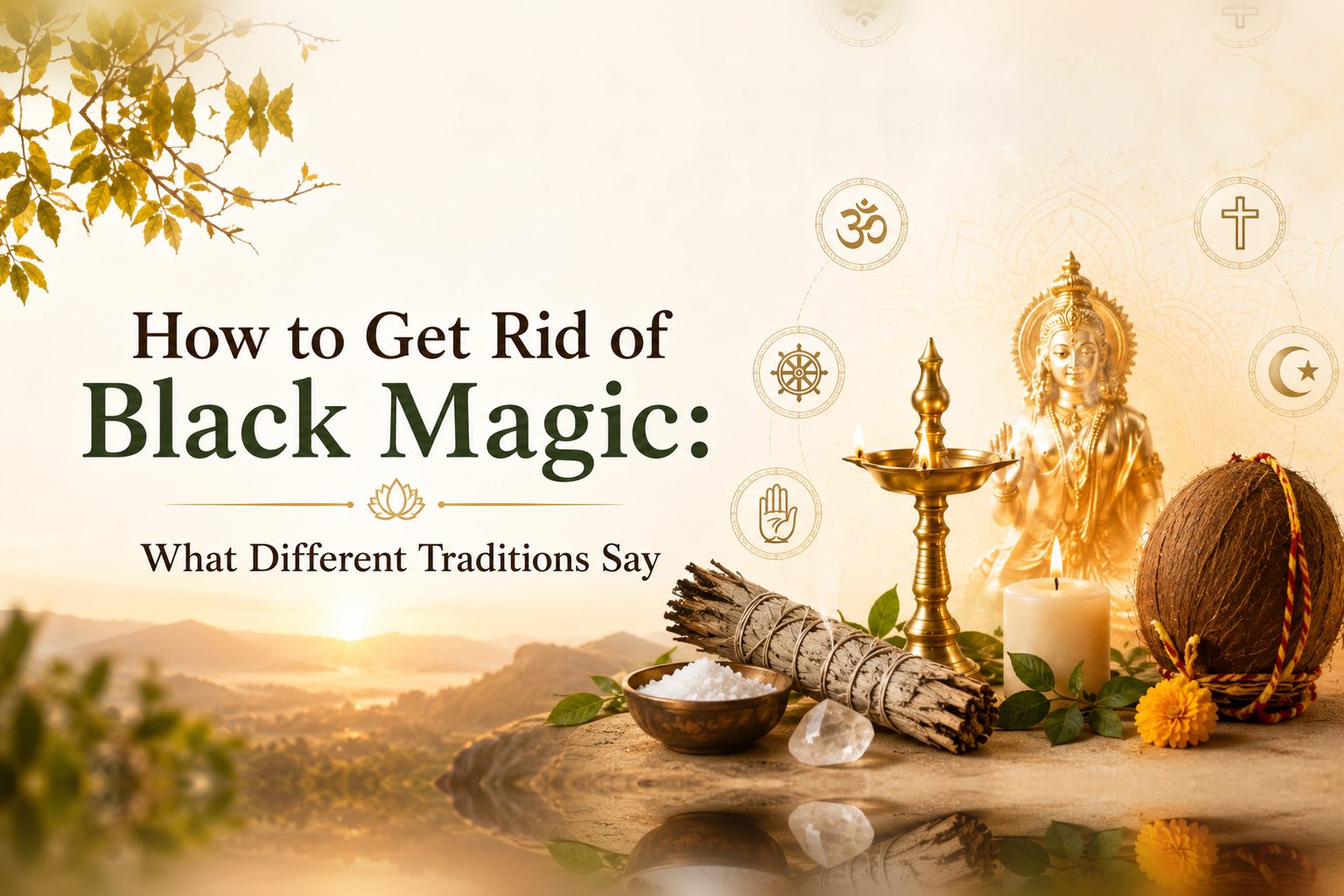
Many traditions include cleansing customs, the use of water, salt, smoke from certain herbs, or ritual bathing, understood by believers to clear negative energy. Anthropologists observe that such rituals often work psychologically as acts of closure, giving a person a concrete action to take and a felt sense that something has changed.
Consulting religious or community figures
In how various communities try to cure black magic, a recurring step is consulting a respected religious figure or elder. The value people report often lies as much in being heard, reassured, and guided by someone trusted as in any ritual performed. This social support is something researchers consistently link to genuine improvements in wellbeing.
Restoring routine and normal life
A quieter but widely echoed piece of traditional wisdom on how to overcome black magic is the return to ordinary life: normal sleep, food, work, and company. Fear thrives in isolation and rumination, and rebuilding routine is one of the most consistently recommended responses across both traditional and modern perspectives.
The Real Struggle: Fighting an Unseen Force
There is something about a black magic affliction that ordinary discussions miss entirely. The affected person is not fighting another person they can see and answer; they are fighting an unseen force, and this is what makes the experience so disorienting. Paranormal disturbances are reported by many who go through it, though not by all, and a deep fear usually takes hold. This fear is not incidental. In the understanding of our tradition, the negative energies at work feed on fear; it is their greatest source of strength. The more frightened and drained a person becomes, the more hold these energies are believed to gain. This is precisely why simply telling an afflicted person to stay calm and think rationally, while well meant, often falls short. They are not in an ordinary state of mind.
This is where the protective deities of the Hindu tradition become so important, and why they have been turned to for exactly this purpose for centuries. Praying to fierce guardian forms such as Hanuman, Madurai Veeran, Karuppaswamy, Pratyangira Devi , and Baglamukhi Devi, Maha Kali is believed to give the afflicted person something they urgently need: mental strength and courage to stand against the fear, and the spiritual protection of deities who are specialists in combating these very forces. The deities clear the negative energies and protect those who seek their refuge. The Hanuman Chalisa itself speaks of Hanuman driving away evil spirits and afflictions- Bhoot Pishaach nikat nahi aave, which is why his worship is so central to this. These are not gentle, abstract prayers. They are invocations of fierce, protective divine power, called upon deliberately because the situation demands strength rather than softness.
Rituals and Prayers People Turn To
Beyond individual prayer, there are established rituals that people engage in to seek relief, and in genuine practice these are the paths that give a frightened person direction rather than leaving them to face the situation alone. Depending on the tradition and the guidance received, these may include dedicated prayers and archanas to protective deities such as Hanuman languli Kavach Paath, Sundara Kanda Parayan, Hanuman Chalisa, Madurai Veeran Padayal Poojas, Karuppaswamy rituals, or Pratyangira Devi Havans – tantric as well as Rishi prokt.The recitation of powerful protective stotras like the Hanuman Chalisa; homas or havans performed in the name of fierce guardian deities; and the use of consecrated vibhuti and protective yantras. What matters is that the person is guided by someone who understands the terrain, rather than acting in isolation and fear. In our own experience of working with people afflicted in this way, including devotees from African-American and West Indian backgrounds who pray through us regularly to have such influences removed, the combination of the right protective prayers and steady guidance is what helps people find their footing again.
Why These Approaches Sometimes Bring Relief
It is worth noting that modern psychology also recognises real mechanisms behind the relief people experience, and these sit comfortably alongside the spiritual understanding rather than replacing it. When fear lifts, its physical symptoms, disturbed sleep, loss of appetite, restlessness, lift with it. Ritual provides a clear sense of before and after that helps the mind let go. The support and guidance of someone trusted reduces the isolation that intensifies suffering. Whether one sees the healing as the removal of a negative force, as the restoration of the person’s own strength, or as both, the return of peace is genuine and observable.
How to Break the Cycle of Fear
For many people, the hardest part is not the alleged black magic itself but the fear of it, which can become a self-sustaining cycle. The belief that one has been cursed produces anxiety; the anxiety produces real symptoms; the symptoms seem to confirm the curse. Traditions and psychology agree on much of how to break this pattern: reduce rumination, avoid dwelling on the fear, stay connected to supportive people, maintain daily structure, and where symptoms are affecting health, seek proper medical and psychological care. Naming the cycle is often the first step out of it.
A Note on Removing Black Magic From a House
Some people specifically ask how to remove black magic from house or home, usually after associating a run of household misfortune or an unsettled atmosphere with it. Traditional responses mirror the personal ones: cleaning and decluttering the space, cleansing customs specific to the culture, prayer or devotional practice in the home, and restoring a calm, ordinary domestic routine. As with personal fears, ordinary causes of an unhappy home, stress, conflict, financial pressure, or a genuine maintenance issue affecting health, are worth examining honestly first.
An Important Caution
While genuine guidance and sincere prayer help, fear can also make people vulnerable to those who exploit it. There are cases of frightened individuals being charged large sums by people who deliberately stoke fear and escalate their demands. Genuine spiritual guidance does the opposite of this: it steadies a person, restores their strength, and never traps them in deepening fear or endless payments. The difference is clear once you know to look for it. Anyone who works by amplifying your fear rather than easing it should be approached with caution.
Frequently Asked Questions
How do people traditionally get rid of black magic?
Across cultures, common traditional responses include prayer and devotional practice, cleansing or purification customs, consulting trusted religious or community figures, and restoring normal daily routine. These are described here as beliefs and practices, not as proven methods, and psychology explains much of the relief people report through the placebo response, ritual closure, and social support.
How can someone break or reverse black magic?
Traditions describe breaking or reversing black magic through faith practices, cleansing customs, and community support. Psychologically, much of the benefit comes from reducing fear and rumination, restoring routine, and feeling supported. There is no scientific evidence for literal supernatural reversal, and ordinary causes of the underlying distress are worth addressing first.
How do I remove black magic from my house?
People commonly respond by cleaning and decluttering the home, performing culture-specific cleansing customs, praying or worshipping in the space, and restoring a calm routine. It is equally wise to check for ordinary causes of household distress, from stress and conflict to genuine maintenance or health issues in the home.
What are the symptoms people attribute to black magic?
People often attribute anxiety, disturbed sleep, unexplained physical complaints, sudden misfortune, and relationship or financial troubles to black magic. Importantly, all of these commonly have ordinary explanations such as stress, medical conditions, or coincidence, which responsible traditions and health professionals encourage examining first.
Which deities are turned to for relief from black magic?
In the Hindu tradition, fierce and protective deities are invoked for exactly this purpose, including Hanuman, Madurai Veeran, Karuppaswamy, Pratyangira, and Baglamukhi. They are turned to because their worship is believed to give the afflicted person courage and mental strength against fear, along with the protection of deities regarded as specialists in combating negative forces. The Hanuman Chalisa itself describes Hanuman driving away evil spirits.
Can black magic really be removed?
In our tradition and experience, relief comes through the right protective prayers, rituals such as homas and archanas to guardian deities, and steady guidance for the affected person, rather than through facing the situation alone in fear. What consistently helps is restoring the person’s strength and courage while addressing any ordinary causes of their distress honestly alongside.
Above all, no one going through this should face it alone. The most practical step is to speak to someone who genuinely understands the terrain and can offer guidance, to pray regularly, and to draw strength from the fierce protective forms of God that our tradition has always turned to at such times. Where a person’s physical or mental health is affected, the care of a qualified professional belongs in the picture as well. Strength, guidance, and steady support are what carry a person through.
A Note on This Article
This article shares the knowledge and perspective of our tradition alongside what modern understanding observes. It is offered to inform and guide, not to frighten, and not to promise any specific outcome. Anyone experiencing serious distress, whether emotional or physical, is encouraged to seek both trusted spiritual guidance and, where health is affected, qualified professional care.