
 10 September 2026
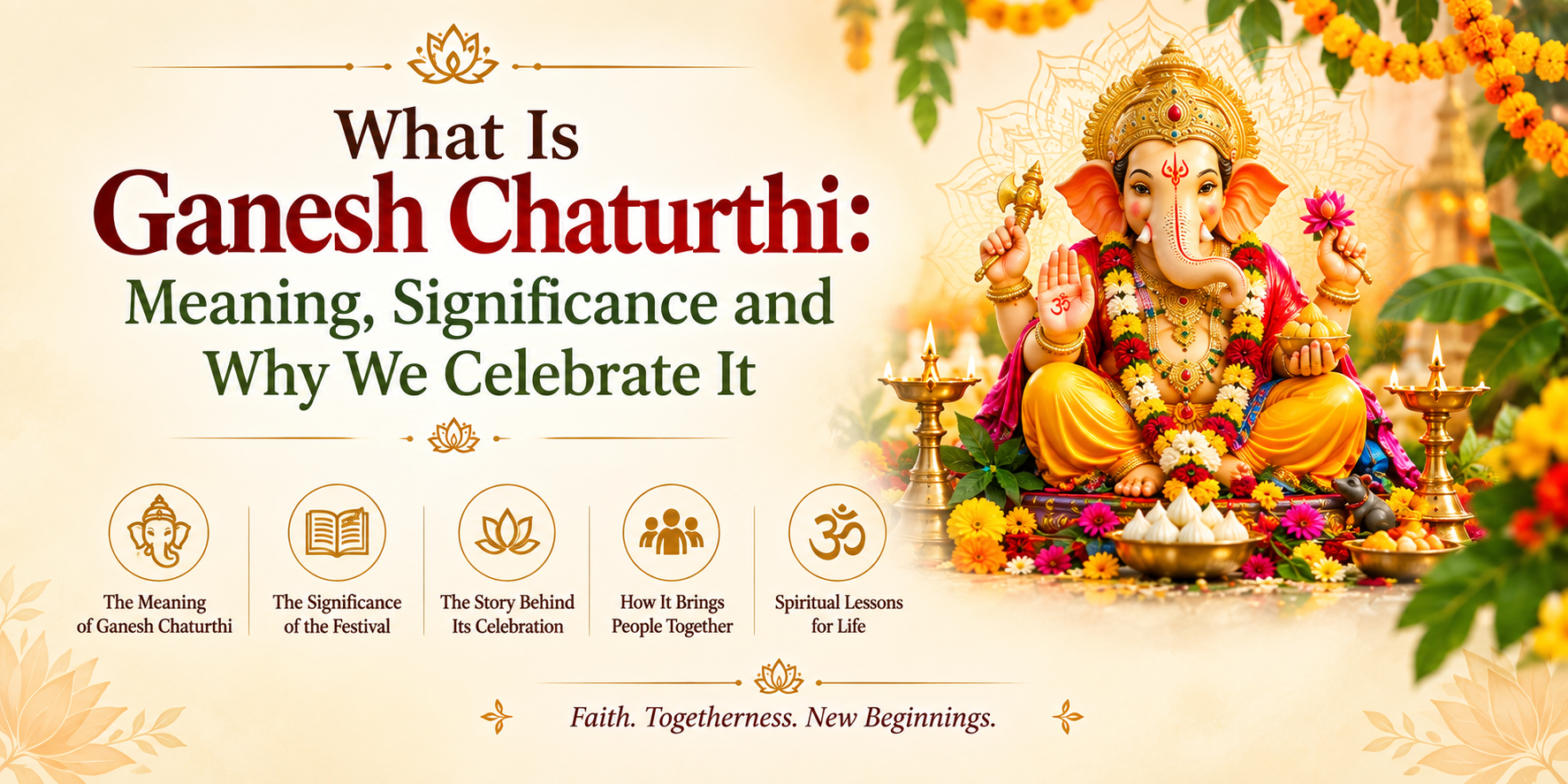
Ganesh Chaturthi is the festival celebrating the birth of Lord Ganesha, the remover of obstacles and the giver of wisdom, observed on the fourth day of the bright fortnight of the month of Bhadrapada. In 2026 it falls on Monday, 14 September. Over the days that follow, Ganesha is welcomed into homes and public pandals as an honoured guest, worshipped daily, and finally sent home with the immersion of the idol. This guide explains what Ganesh Chaturthi means, what happens through the festival, and why it is celebrated with such feeling across India.
Ganesh Chaturthi Meaning
The name is straightforward. Chaturthi is the fourth tithi of the lunar fortnight, and this festival falls on the Chaturthi of the waxing moon in Bhadrapada. The day is dedicated to Ganesha, and the whole multi-day festival that follows is known as Ganesh Utsav or Ganeshotsav.
The deeper meaning lies in who Ganesha is. He is Vighnaharta, the one who removes obstacles, and this is why he is invoked at the beginning of every undertaking, from a wedding to a new business to the first page of a schoolbook. He is also Buddhi Pradayaka, the giver of intelligence and discernment, which is why students in particular worship him. Ganesh Chaturthi is the day these qualities are honoured at their source.
When Is the Ganesha Festival in 2026?
- Ganesh Chaturthi and Sthapana: Monday, 14 September 2026
- Chaturthi tithi: 7:06 AM on 14 September to 7:44 AM on 15 September
- Madhyahna puja muhurat: approximately 11:02 AM to 1:31 PM in Delhi, and 11:20 AM to 1:48 PM in Mumbai
- Anant Chaturdashi and main visarjan: Friday, 25 September 2026
Puja timings shift by city because they depend on local sunrise, so confirm the muhurat for your location. The Madhyahna period, the middle portion of the day, is the traditional window for the main Ganesh puja, because Ganesha is held to have been born during this part of the day.
Why We Celebrate Ganesh Chaturthi
The festival marks the birth of Ganesha, and the story most widely told is this. Goddess Parvati created a boy from the sandalwood paste of her own body and gave him life, setting him to guard the entrance while she bathed. When Shiva returned and was refused entry by a child he did not know, a confrontation followed and the boy was beheaded. Parvati’s grief was such that Shiva undertook to restore him, and the head of an elephant was brought and joined to the body. The boy was revived, and Shiva granted him the boon that he would be worshipped before all other deities, at the start of every undertaking.
That last detail is the heart of it. Ganesha’s precedence is not a matter of rank in a hierarchy but a boon given in recompense. It is the reason no puja, no ceremony, and no auspicious beginning in the tradition proceeds without first invoking him.
The Significance of Ganesh Chaturthi
Several strands of meaning run through the festival.
Removal of obstacles
As Vighnaharta, Ganesha is worshipped for the clearing of impediments, whether in work, study, family matters, or new ventures. Many families deliberately begin new undertakings during these days.
Wisdom and learning
Ganesha is the deity of buddhi, of intelligence and sound judgement. Students worship him during this festival for clarity of mind, and the association with learning is one of the oldest attached to him.
The guest who comes and goes
This is the aspect that gives the festival its emotional character. Ganesha is not merely worshipped during Ganesh Utsav. He is invited into the home as a guest, welcomed with a formal installation, attended to daily with food and aarti, and then, at the appointed time, escorted out and released into the water. Families speak of Bappa arriving and Bappa leaving in exactly the terms they would use for a beloved relative.
Letting go
The visarjan carries its own teaching. Everything that is welcomed must in time be released, and the immersion of a form that was worshipped for days is understood as a lesson in impermanence and in letting go with grace rather than with grasping.
What Happens on Ganesh Chaturthi
Sthapana, the installation
The home is cleaned and the puja space prepared and decorated. The Ganesha idol is brought home, often in a small procession, and installed on a decorated platform during the auspicious window.
Pran Pratishtha
Mantras are chanted to invoke the presence of the deity into the idol. In many households a priest performs this, and in others the head of the family does so.
Shodashopachara puja
The sixteen offerings are made: water, sandalwood, flowers, incense, lamp, and naivedyam among them. Durva grass, offered in bunches of twenty one blades, is particularly beloved of Ganesha, along with red flowers, especially hibiscus, and modak.
Daily worship through the festival
For as many days as the family has invited him, Ganesha is offered aarti morning and evening, fresh naivedyam, and the attention due to a guest. Relatives and neighbours visit for darshan, and public pandals hold cultural programmes through the period.
Uttar puja and visarjan
Before the immersion, a concluding puja is performed, a final aarti offered, and forgiveness asked for any lapse in hospitality during the stay. The idol is then carried in procession and immersed, with the cry that has echoed through Indian streets for over a century, Ganpati Bappa Morya, Pudhchya Varshi Lavkar Ya, meaning come again soon, next year.
Modak, Durva and the Offerings Ganesha Loves
Modak is the offering most associated with Ganesha, traditionally offered in twenty one pieces, a sweet dumpling of rice flour filled with coconut and jaggery. Karanji is prepared in many households alongside it. Durva grass in bunches of twenty one, red hibiscus flowers, coconut, jaggery, and fruits complete the traditional offering.
A Note on Eco-Friendly Celebration
Idols of plaster of Paris finished with chemical paints do not dissolve and cause real harm to the water bodies they enter. A clay murti with natural colours, immersed in a tank or at home in a bucket of water, honours the deity and the rivers alike. Many families and pandals have made this change, and it sits comfortably with everything the festival stands for.
Frequently Asked Questions
What is Ganesh Chaturthi?
Ganesh Chaturthi is the festival marking the birth of Lord Ganesha, observed on the fourth day of the bright fortnight of Bhadrapada. Ganesha is installed in homes and pandals, worshipped daily as an honoured guest, and finally immersed. In 2026 it falls on Monday, 14 September.
What is the meaning of Ganesh Chaturthi?
Chaturthi is the fourth tithi of the lunar fortnight, and the festival falls on the Chaturthi of the waxing moon in Bhadrapada. It honours Ganesha as Vighnaharta, remover of obstacles, and Buddhi Pradayaka, giver of intelligence.
Why do we celebrate Ganesh Chaturthi?
It marks the birth of Lord Ganesha. In the traditional account, Parvati created him and Shiva, after a confrontation in which the boy was beheaded, restored him with the head of an elephant and granted him the boon of being worshipped before all other deities at the start of every undertaking.
What happens on Ganesh Chaturthi?
The idol is installed during the auspicious window, life is invoked into it through Pran Pratishtha, and the Shodashopachara puja is performed with durva, red flowers, and modak. Daily aarti and naivedyam follow for the duration of the stay, and the festival concludes with the uttar puja and visarjan.
When is the Ganesha festival in 2026?
Ganesh Chaturthi is on Monday, 14 September 2026, with the Madhyahna puja muhurat around 11:02 AM to 1:31 PM in Delhi and 11:20 AM to 1:48 PM in Mumbai. Anant Chaturdashi and the main visarjan fall on Friday, 25 September 2026.
Why is the Ganesha idol immersed in water?
Ganesha is invited as a guest for a fixed period, and the visarjan is his ceremonial departure. It carries a teaching about impermanence, that what is welcomed must in time be released, and it closes the cycle of welcome, worship, and farewell with the prayer that he return the following year