
 18 August 2026
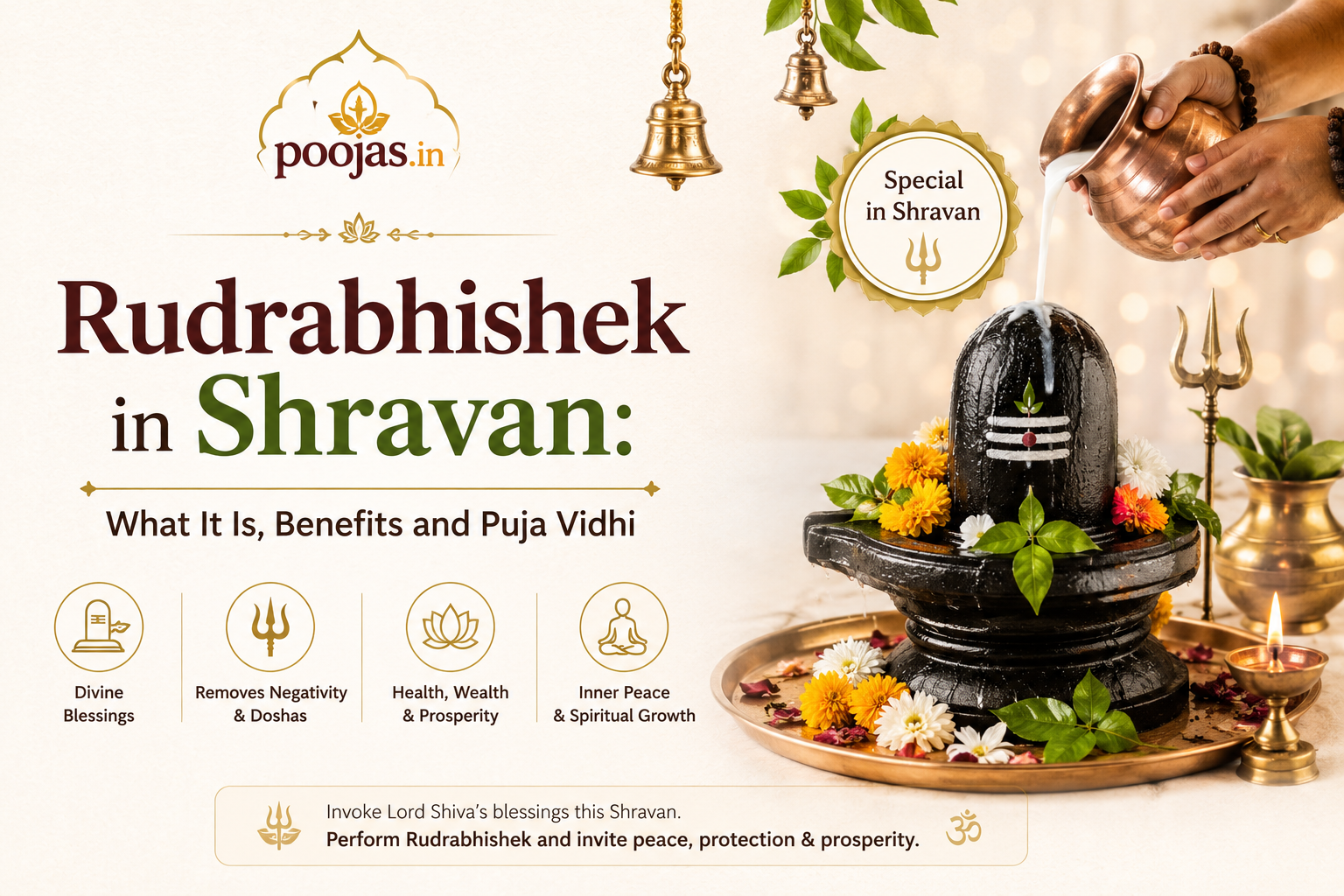
Rudrabhishek is the ceremonial bathing of the Shiva Lingam accompanied by the chanting of the Rudram, and performing it during Shravan maas is considered the most auspicious observance of the entire year. In 2026, the Shravan Somvars fall on 3, 10, 17, and 24 August in North India and on 17, 24, 31 August and 7 September in the South and West. This guide explains what Rudrabhishek is, why Shravan Mondays are held to be so powerful for it, the benefits devotees seek, the samagri required, and the vidhi followed.
What Is Rudrabhishek?
Rudrabhishek combines two elements. Rudra is the fierce and benevolent form of Lord Shiva addressed in the Sri Rudram of the Yajur Veda, and abhisheka is the ritual bathing of the deity. In a Rudrabhishek, the Shiva Lingam is bathed with a sequence of sacred substances while the Rudram is chanted, so that every offering falls in rhythm with the Vedic hymn.
What distinguishes it from an ordinary abhisheka is the Rudram itself. It is among the most revered hymns in the Vedic corpus, and the combination of its recitation with continuous abhisheka is what gives the ritual its standing.
Why Rudrabhishek Is Performed in Shravan
Shravan is held to be the month of Lord Shiva, particularly in North India and Maharashtra, and its Mondays are the most sacred days within it. The devotional reasoning traces back to the Samudra Manthan, when Lord Shiva drank the Halahala poison that emerged from the churning of the ocean and held it in his throat, becoming Neelakantha. Water and milk were offered to cool its effect, and the abhisheka performed every Shravan Monday continues that offering of gratitude and cooling.
There is a further connection worth noting during this month. Shravan opens with Nag Panchami and the worship of the serpent deities, and Lord Shiva wears the Naga as his ornament. Seeking his protection during the monsoon, when serpents move about closest to human habitation, has long been part of the devotional understanding of the season.
Rudrabhishek Benefits: Rudrabhishek Ke Fayde
Devotees undertake Rudrabhishek for a range of purposes, and the traditional benefits include:
- Removal of graha doshas and the malefic effects of planetary afflictions in the horoscope
- Relief during Sade Sati, Shani dasha, and other difficult transits
- Health, longevity, and recovery, invoking Shiva as Mrityunjaya, the conqueror of death
- Peace and harmony in the household, and resolution of family discord
- Removal of obstacles in career, business, and long-stalled efforts
- Progeny blessings and marital wellbeing
- Purification of the home and its atmosphere, and protection from negative influences
- Spiritual progress and mental clarity for those on a sadhana path
Types of Abhisheka Dravya: What the Lingam Is Bathed With
Each substance offered in the abhisheka is associated with a particular result, which is why the choice of dravya is made according to the devotee’s purpose:
- Water (jala): peace and general wellbeing
- Milk (dugdha): longevity and freedom from illness
- Curd (dadhi): prosperity and progeny
- Ghee (ghrita): health and strength
- Honey (madhu): relief from debts and freedom from sorrow
- Sugarcane juice (ikshu rasa): fulfilment of desires and happiness
- Panchamrita: the combination of milk, curd, ghee, honey, and sugar, offered for all-round auspiciousness
- Bhasma (sacred ash): purification and removal of negative influences
Rudrabhishek Samagri List
- Shiva Lingam, or a temple Lingam if performed at a temple
- Water from a sacred source, and a kalasha
- Milk, curd, ghee, honey, and sugar for panchamrita
- Sugarcane juice and coconut water where custom prescribes
- Bilva leaves, the offering most beloved to Shiva, in odd numbers
- White flowers, dhatura, and bhang where traditional
- Bhasma or vibhuti, chandan, akshata
- Ghee lamp, incense sticks, camphor
- Naivedyam: fruits, sweets, and coconut
- Rudraksha mala for japa
Rudrabhishek Kaise Hota Hai: The Vidhi
Step 1: Sankalpa
The devotee’s name, gotra, nakshatra, and the purpose of the ritual are formally declared, dedicating the Rudrabhishek to that intention.
Step 2: Ganesha puja and purification
As with every auspicious undertaking, Lord Ganesha is invoked first, followed by the purification of the space, the kalasha sthapana, and the invocation of the Navagrahas where the vidhi includes it.
Step 3: The abhisheka with Rudram
The Shiva Lingam is bathed in sequence with the chosen dravyas while the Sri Rudram is chanted, followed in the fuller versions by the Chamakam. Each offering is made in rhythm with the recitation, and this continuous union of hymn and abhisheka is the core of the ritual.
Step 4: Bilva archana and alankara
Bilva leaves are offered to the Lingam along with white flowers, followed by the alankara, the adorning of the Lingam with chandan, bhasma, and flowers.
Step 5: Naivedyam, mantra japa, and aarti
Naivedyam is offered, and japa of Om Namah Shivaya or the Maha Mrityunjaya mantra is performed. The ritual concludes with aarti and the distribution of prasadam.
Rudrabhishek Mantra
The Sri Rudram of the Yajur Veda is the principal recitation of the ritual, and it contains within it the Panchakshari mantra:
Om Namah Shivaya.
The Maha Mrityunjaya mantra is chanted alongside it, particularly when the Rudrabhishek is undertaken for health and longevity:
Om Tryambakam Yajamahe Sugandhim Pushtivardhanam, Urvarukamiva Bandhanaan Mrityor Muksheeya Maamritaat.
Rudrabhishek Puja at Home
A simple Rudrabhishek can be performed at home if a Shiva Lingam is kept in the household shrine. Bathe early, offer water, panchamrita, and water again, offer bilva leaves and white flowers, chant Om Namah Shivaya or the Maha Mrityunjaya mantra as your capacity allows, and conclude with a lamp, naivedyam, and aarti.
The complete Rudrabhishek with the full recitation of the Sri Rudram and Chamakam requires priests trained in Vedic chanting, and is performed at a temple or with priests invited to the home. Householders often keep the simple daily form and undertake the complete ritual on the Shravan Somvars.
Frequently Asked Questions
What is Rudrabhishek?
Rudrabhishek is the ritual bathing of the Shiva Lingam with sacred substances while the Sri Rudram of the Yajur Veda is chanted. The union of the Vedic hymn with continuous abhisheka is what distinguishes it from an ordinary abhisheka.
What are the benefits of Rudrabhishek?
Devotees perform Rudrabhishek for removal of graha doshas, relief during Sade Sati and difficult transits, health and longevity, family harmony, removal of career and business obstacles, progeny blessings, purification of the home, and spiritual progress.
Why is Rudrabhishek done in Shravan?
Shravan is the month of Lord Shiva, and the tradition traces the practice to the Samudra Manthan, when Shiva drank the Halahala poison and water and milk were offered to cool its effect. Every Shravan Monday abhisheka continues that offering, making these the most sought-after days of the year for the ritual.
What samagri is needed for Rudrabhishek?
The core items are water, milk, curd, ghee, honey and sugar for panchamrita, bilva leaves, white flowers, bhasma, chandan, akshata, a ghee lamp, incense, camphor, and naivedyam of fruits and sweets.
Can Rudrabhishek be done at home?
A simple form can be performed at home with a household Shiva Lingam, offering water, panchamrita, bilva leaves, and mantra japa. The complete ritual with full Sri Rudram and Chamakam recitation requires priests trained in Vedic chanting.
Which abhisheka dravya should be chosen?
The substance is chosen according to purpose: water for peace, milk for longevity, curd for prosperity and progeny, ghee for health, honey for relief from debt, sugarcane juice for fulfilment of desires, and panchamrita for all-round auspiciousness.