


Description
Tila Homa: 12,000 Ahutis for Pitru Dosha Shanti and the Liberation of Ancestors Who Departed Through Unnatural Death
The Vedic tradition holds that ancestral souls who departed through an unnatural death: suicide, accident, murder, or wrong medical treatment: are often unable to continue their normal journey of evolution in the afterlife. They remain in an intermediate state, unable to progress, and this stagnation creates what is called Apa Mrityu Dosha (the dosha of unnatural death). The effect of this dosha on the living descendants is significant: persistent obstacles in marriage, career, and finances; health difficulties; recurring family conflict; and a pervasive sense that something unseen is holding the family back. The Tila Homa is the prescribed Vedic remedy: a comprehensive ancestor ritual of 12,000 sesame (tila) ahutis that facilitates the departed soul’s journey forward and frees the performing family from the accumulated Pitru Dosha.
This Homa addresses what general Shraddha and Pitru Paksha rituals cannot fully resolve: the specific case of an ancestor who departed unnaturally. It can be performed on any day of the year: not only during Pitru Paksha: making it immediately available whenever the family is ready. The complete ritual includes Pinda Pradhana, Pitru Avahana, Poorvanga Daanam, Sakala Devata Avahana, and Utharanga Daanas. At Rs 61,000, performed in your name and star.
What Is Pitru Dosha and Why Does Unnatural Death Create It?
Understanding Why the Tila Havan Is the Specific Remedy for Apa Mrityu Dosha
Pitru Dosha literally means “deficiency in ancestral obligations”: a karmic imbalance that arises when the family has not adequately fulfilled its dharmic duties toward departed ancestors. The most common and severe form of Pitru Dosha arises from unnatural death (Apa Mrityu): when an ancestor departs suddenly or violently through suicide, accident, murder, or incorrect medical treatment, the soul is caught between lives in a state that the tradition describes as “stuck”: unable to proceed to the realm of the Pitrus (departed ancestors) and unable to take a new birth. This liminal condition creates a specific energetic burden on the family, particularly on children and grandchildren of the generation after the unnatural death.
The Pitru Dosha Shanti Tila Homa specifically addresses this condition. The sesame seed (tila) is specifically sacred to the ancestors in Vedic ritual: it is the prescribed offering for Pitru rituals above all others. Tila (sesame) is associated with Saturn (Shani), the planet of karma, and with the ancestors’ realm. 12,000 tila ahutis create a massive ritual field of Pitru-specific sacred energy that simultaneously satisfies the departed soul and releases the Karta (the performing family member) from the accumulated Pitru Dosha.
Why is this Tila Homa available any day: not only Pitru Paksha?
Most people associate Pitru rituals with Pitru Paksha (the 16-day lunar period around September-October). While that period is auspicious for ancestor rituals in general, the Tila Homa for unnatural death is not restricted to any specific time. The ancestor’s need for liberation is not seasonal: it is ongoing. This Homa can be performed on any day when the family is ready, making it immediately actionable.
Causes of Unnatural Death Addressed by This Homa
The Tila Homa Pitru Dosha Shanti is specifically prescribed for families where an ancestor departed through any of the following circumstances:
Suicide
Sudden, self-chosen departure that creates an especially intense form of Apa Mrityu Dosha
Accidents
Sudden, unexpected death through road, workplace, or other accidents
Murder
Violent death inflicted by another, carrying both the departed soul’s trauma and the family’s grief
Wrong Medical Treatment
Death caused by medical error or incorrect treatment: an increasingly relevant category
The Complete Ritual: What 12,000 Ahutis and Five Components Deliver
The Tila Homa is not a single-component ritual. It consists of five distinct ritual sections that together form the complete Pitru Dosha Shanti procedure:
Pinda Pradhana
The offering of Pinda (ritual balls of rice and sesame) to the departed ancestor: the physical offering that feeds and satisfies the ancestral soul in the intermediate state, creating the conditions for their forward movement.
Pitru Avahana
The formal invocation and welcoming of the departed ancestor into the ritual space: calling them to receive the ritual’s benefit, with their name, relationship, and circumstances of death declared in the Sankalpa.
Poorvanga Daanam
The preliminary offerings given before the main Homa: prescribed items given to the presiding priests as the beginning of the Daan portion that satisfies the ritual’s requirements.
Sakala Devata Avahana
The invocation of all deities: ensuring that the Homa’s offerings are received and witnessed by the complete pantheon of Vedic deities, giving the ancestor’s liberation the highest possible divine sanction.
Utharanga Daanas
The concluding donations and offerings that close the ritual: the final dharmic act that completes the Karta’s obligation to the ancestor and formally seals the Pitru Dosha Shanti.
How Pitru Dosha Manifests and What Changes After This Homa
Why Book This Tila Homa Through Poojas.in
Complete 5-component ritual: 12,000 ahutis: all five components (Pinda Pradhana, Pitru Avahana, Poorvanga Daanam, Sakala Devata Avahana, Utharanga Daanas) are performed completely. This is not a shortened Pitru ritual but the full prescribed Pitru Dosha Shanti procedure.
Available any day of the year: unlike Shraddha rituals limited to Pitru Paksha, this Tila Homa can be performed immediately on any day: freeing families from waiting for an annual window when the need is present now.
Specifically addresses unnatural death: this Homa is not a general Pitru ritual. It is the specific remedy for the category of Pitru Dosha arising from suicide, accidents, murder, and medical error: the cases that general Shraddha cannot fully address.
Bookings from India and abroad: performed in your name and star. Many families outside India book this Homa for ancestors from their home country. Provide the departed person’s name and, if known, circumstances of death when booking.
Frequently Asked Questions: Tila Homa Pitru Dosha Shanti
What is Tila Homa and what is it performed for?
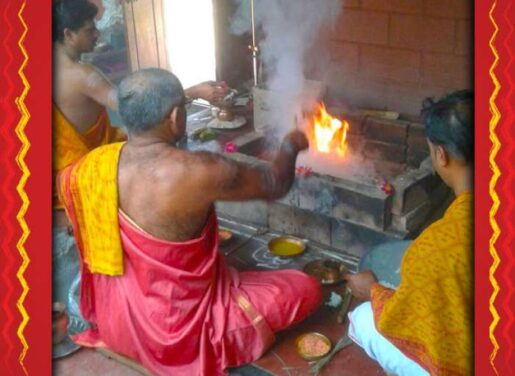
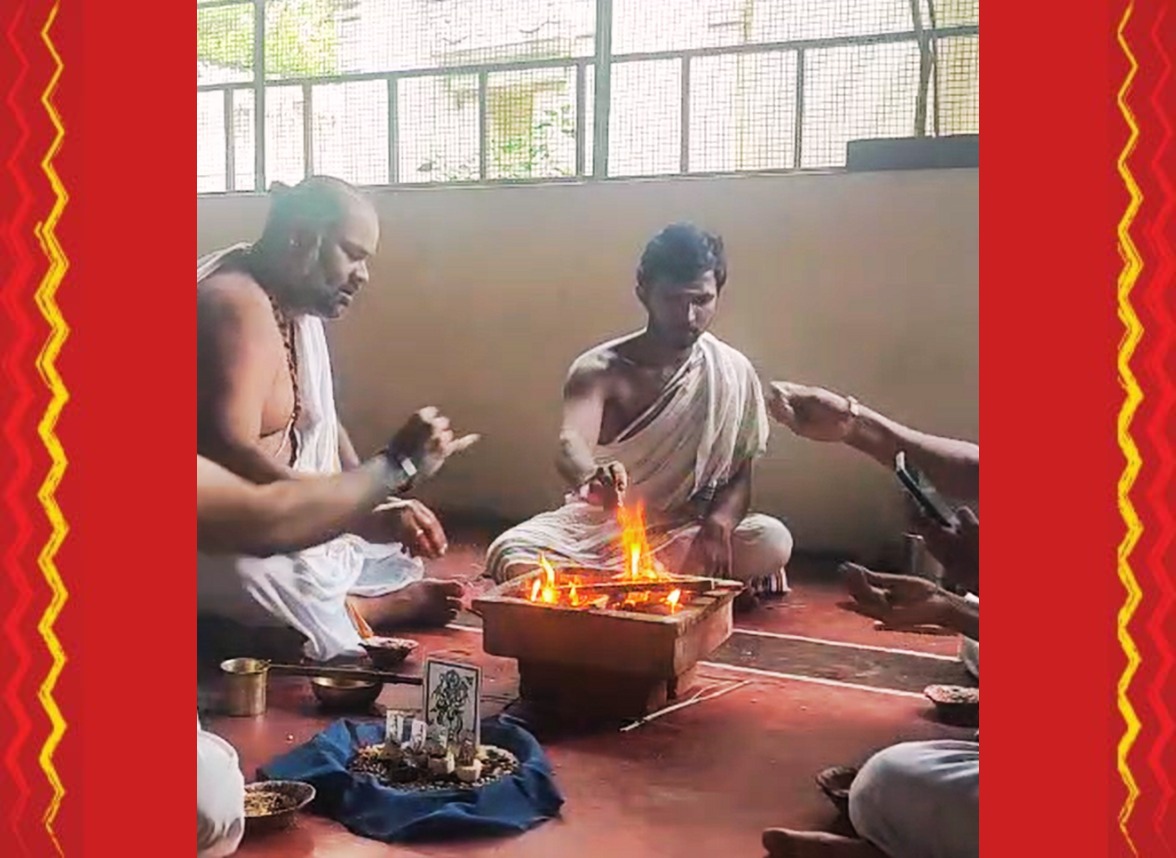
Tila Homa (also Tila Havan) is a Vedic fire ritual of 12,000 sesame (tila) ahutis performed specifically for Pitru Dosha Shanti: the liberation of ancestors who departed through unnatural death (suicide, accident, murder, or wrong medical treatment) and the release of the family from the accumulated Pitru Dosha. It includes five ritual components: Pinda Pradhana, Pitru Avahana, Poorvanga Daanam, Sakala Devata Avahana, and Utharanga Daanas. Price: Rs 61,000. It can be performed on any day of the year.
What is Pitru Dosha Shanti and why is the Tila Havan prescribed for it?
Pitru Dosha arises when the family has not adequately fulfilled dharmic obligations to departed ancestors. The most severe form comes from Apa Mrityu (unnatural death): where the soul is unable to progress in its normal after-life journey and creates a burden on living descendants through obstacles in marriage, career, and health. Sesame (tila) is the prescribed Pitru offering in Vedic tradition, associated with Saturn and the ancestral realm. 12,000 tila ahutis create a complete field of Pitru-specific sacred energy, satisfying the ancestor and releasing the Karta from the Dosha.
Does this Tila Homa need to be performed during Pitru Paksha only?
No. While Pitru Paksha (the 16-day period in the waning fortnight of Bhadrapada month) is auspicious for ancestor rituals generally, the Tila Homa Pitru Dosha Shanti can be performed on any day of the year. The ancestor’s need for liberation is continuous: not seasonal. This makes the Homa immediately available whenever the family is ready to perform it.
What information do I need to provide when booking this Homa?
When booking the Tila Homa, share: your name and nakshatra (as the Karta performing on behalf of the family); the departed ancestor’s name, relationship to you, and: to the extent known: the circumstances of their death. The Sankalpa at the start of the Homa formally declares this information and specifically dedicates the ritual to that ancestor’s liberation.
Book the Tila Homa for Pitru Dosha Shanti
Rs 61,000. 12,000 sesame ahutis for the liberation of an ancestor who departed through unnatural death. Available any day. Share your name, nakshatra, and the departed ancestor’s details when booking.