
 24 August 2026
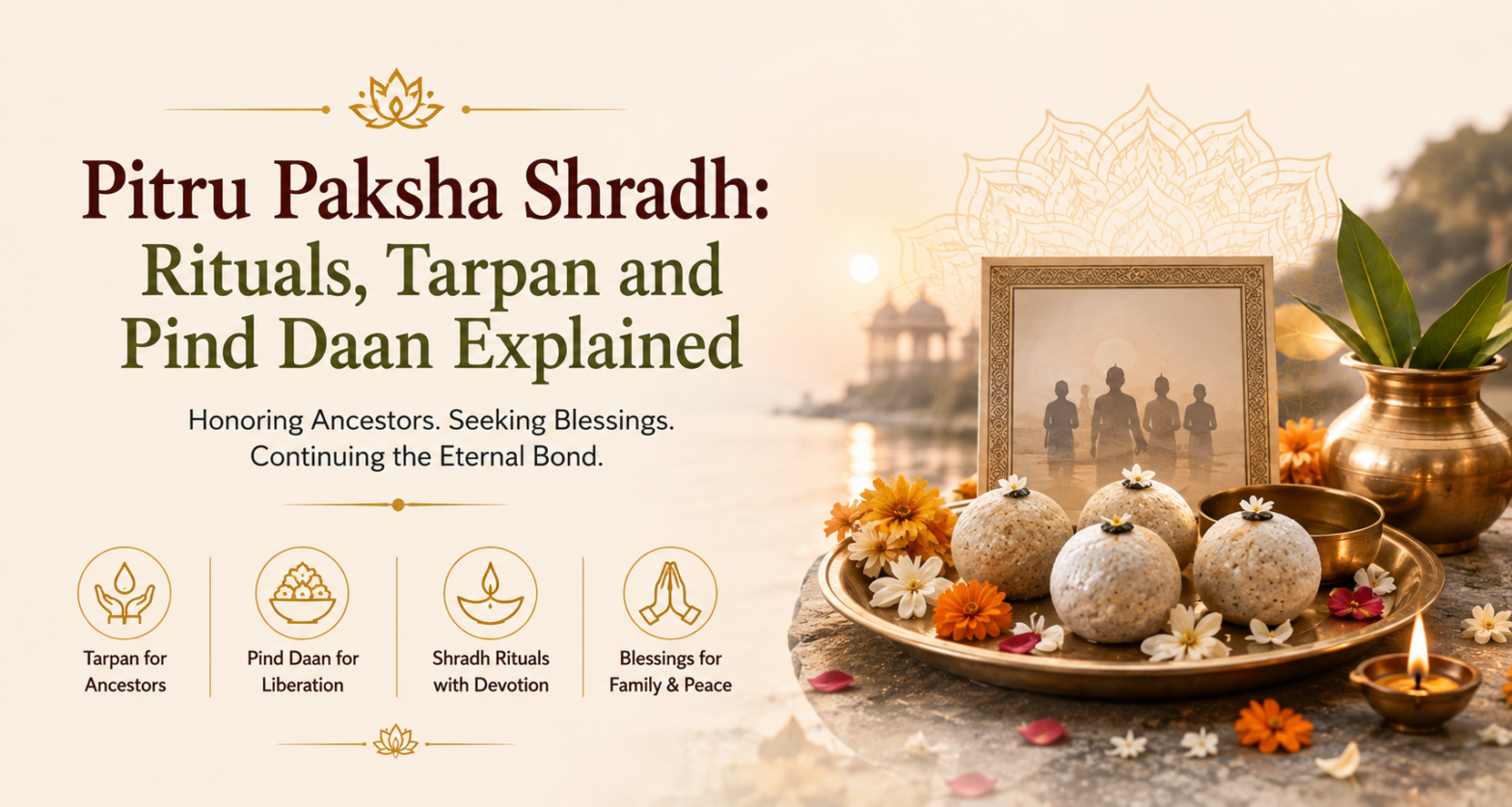
Pitru Paksha shradh is the ritual of honouring departed ancestors performed during the fortnight from 26 September to 10 October in 2026, and it rests on three core observances: Tarpana, the offering of water; Pinda Dana, the offering of rice balls; and Anna Daan, the giving of food. Shradh is performed on the tithi corresponding to the ancestor’s passing, and where that tithi is unknown, on Sarva Pitru Amavasya. This guide explains what shradh means, the rituals that make it up, who performs them, and how the practice varies across regions and families.
What Is Shradh?
The word shradh comes from shraddha, meaning faith and sincerity. This is the key to understanding the ritual: it is not a mechanical performance but an offering made with genuine faith and gratitude. Shradh is the rite through which a family honours its departed ancestors, traditionally across three generations, expressing thanks for the life and lineage received from them.
Pitru Paksha shraddha differs from the shradh performed on a death anniversary in that the whole fortnight is set aside for it, and each family observes the tithi that corresponds to their ancestor’s passing.
The Three Core Pitru Paksha Rituals
Tarpana: the offering of water
Pitru Paksha Tarpana is the offering of water made while remembering the ancestors. Water is mixed with black sesame seeds, and in many traditions kusha grass is used as well. The offering is made facing south, the direction associated with the ancestors, with the sacred thread worn over the right shoulder where that custom is followed.
Many families perform a simple Tarpana every morning through the whole fortnight rather than on the tithi alone. The specific mantras, direction, and sequence differ meaningfully between traditions, so families follow their own lineage practice or the guidance of a priest who knows it.
Pinda Dana: the offering of pindas
Pinda Dana involves offering prepared food portions, traditionally rice balls mixed with sesame, ghee, and other simple ingredients, representing sustenance offered to the ancestors. The pindas are offered with mantras and afterwards given to a cow, to a crow, or placed in flowing water, depending on the tradition.
Certain pilgrimage centres are especially associated with Pinda Dana. Gaya in Bihar is regarded as the most sacred site, and Prayagraj, Kashi, Rameswaram, and other kshetras are also visited for organised ancestral rites. It is worth stating clearly, however, that travelling to a pilgrimage centre is not compulsory. Shradh performed at home with sincerity is complete in itself.
Anna Daan: the giving of food
Feeding others is central to Pitru Paksha shradh rather than an addition to it. Food is offered to a Brahmin, a guest, or anyone in need, and the giving of grain, clothing, and useful support is held to reach the ancestors through the act of charity itself. In many households the offering also includes portions set apart for the crow, the cow, and the dog, a practice known in North India as Kagwal or Kak Bali.
Who Performs the Shradh?
Traditionally the eldest son performs the shradh rituals for the family, and where there is no son, the practice varies: a younger son, a grandson, a son-in-law, a nephew, or in many traditions a daughter may perform the rites. Practice on this point differs considerably by region and community, and families should follow their own custom or seek guidance from a priest familiar with their tradition rather than assuming a single universal rule.
Pitru Paksha Shradh Rituals: The Day in Outline
- Bathe early and prepare a clean, simple space for the rites
- Make a sankalpa stating name and gotra and remembering the ancestors by name
- Perform Tarpana with water and black sesame, facing south
- Prepare simple sattvic food including rice, dal, vegetable, and kheer
- Perform Pinda Dana where the family tradition includes it
- Offer food in the ancestors’ name before the family eats, setting apart portions for the crow, cow, and dog
- Feed a Brahmin, guest, or anyone in need, and offer daana
- Conclude with a prayer for the peace of the departed
Regional Variation in Shradh Practice
The core of honouring ancestors is constant, but the rituals vary widely across the country. In Uttar Pradesh, Bihar, and Punjab, families commonly visit the banks of the Ganga or a local sacred river for Tarpana, with Gaya being the principal site for Pinda Dana. In Bengal, Odisha, and Assam, the closing Amavasya is observed as Mahalaya, marking the ceremonial beginning of the Durga Puja season. In Tamil Nadu the fortnight is known as Mahalaya Paksha, with Rameswaram a major destination for the rites. In Kerala, Mahalaya Amavasya is observed with great devotion at temples such as Aluva Manappuram.
These differences are genuine and none is more correct than another. The practice of your own family and region is the one to follow.
The Meaning Behind the Rituals
The tradition is clear that shradh carries its full meaning when the ritual is accompanied by the values it represents: gratitude to previous generations, dignity and care in the treatment of living parents and elders, charity towards those in need, avoiding waste, and preserving the memory of the family. A ritual performed for departed ancestors becomes far more meaningful when the living members of the family are treated with the same respect.
Frequently Asked Questions
What is Pitru Paksha shradh?
Pitru Paksha shradh is the ritual of honouring departed ancestors during the fortnight from 26 September to 10 October 2026. It comprises Tarpana (water offering), Pinda Dana (rice ball offering), and Anna Daan (giving of food), performed on the tithi corresponding to the ancestor’s passing.
What is the difference between Tarpana and Pinda Dana?
Tarpana is the offering of water mixed with black sesame while remembering the ancestors, often performed daily through the fortnight. Pinda Dana is the offering of prepared rice balls representing sustenance, performed with mantras and afterwards given to a cow or crow or placed in flowing water.
Who can perform the shradh rituals?
Traditionally the eldest son performs the rites. Where there is no son, practice varies by region and community, and a younger son, grandson, son-in-law, nephew, or in many traditions a daughter may perform them. Families should follow their own custom or consult a priest familiar with their tradition.
Is it necessary to go to Gaya for Pind Daan?
No. Gaya is regarded as the most sacred site for Pinda Dana and many families travel there, but a pilgrimage is not compulsory. Shradh performed at home with sincerity is considered complete in itself.
Can shradh be performed every day of Pitru Paksha?
Many families perform a simple daily Tarpana through the entire fortnight, while the full shradh is performed on the tithi corresponding to the ancestor’s passing, or on Sarva Pitru Amavasya if that tithi is unknown.