

 2 August 2026
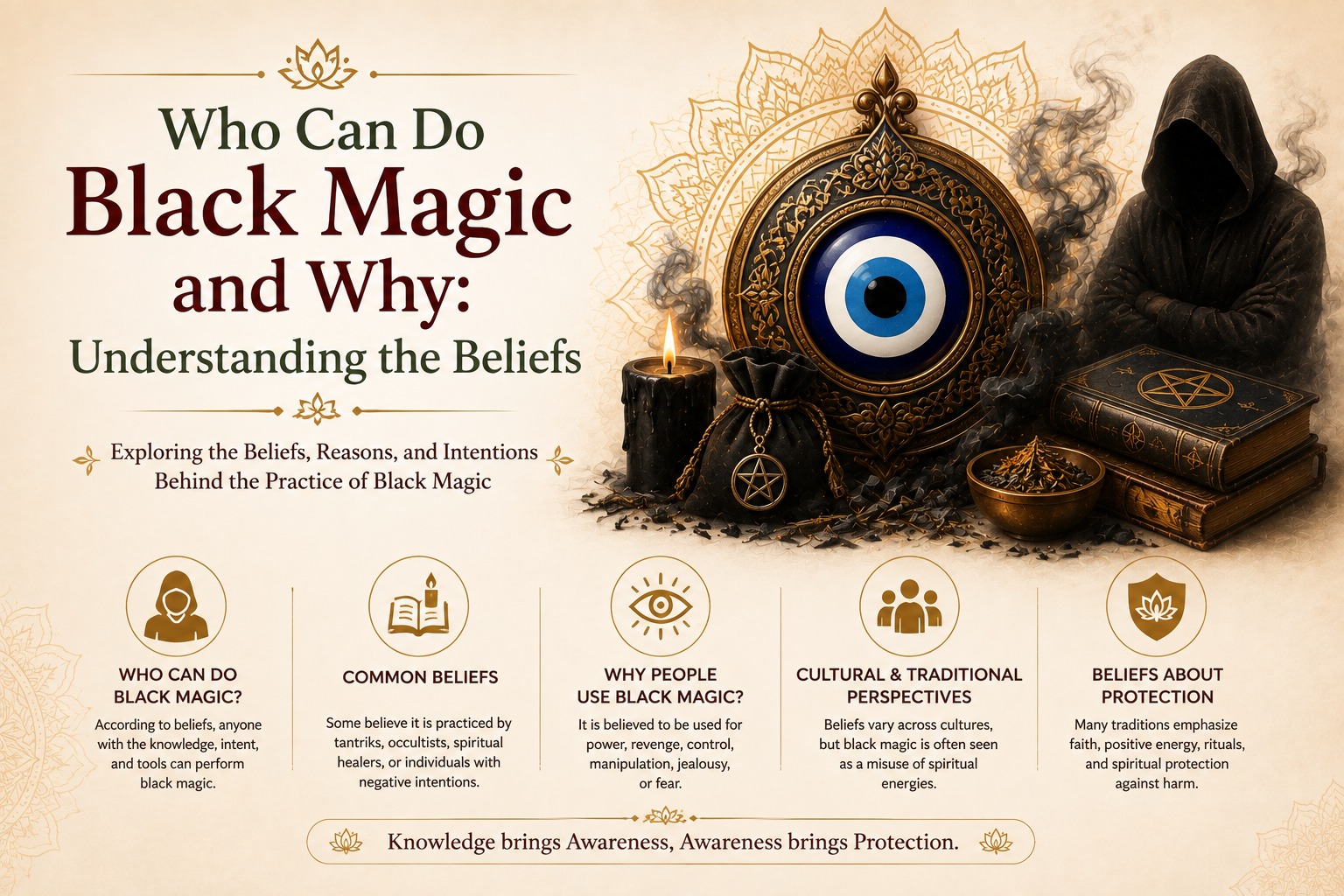
Who can do black magic, and why would anyone practise it? These questions come up naturally once someone starts reading about the subject. This article explains what different cultures believe about who practises black magic and the motives traditionally attributed to it, alongside what history and social science observe about such accusations. It is written to share knowledge only. It makes no claim that black magic is real, names no group or individual, and does not support suspecting or accusing anyone.
What Traditions Say About Who Practises Black Magic
In cultures where the belief exists, the figure of the black magic practitioner takes many forms. Some traditions speak of specialists, people believed to have learned occult techniques or inherited them. Others hold that anyone with strong enough ill intent might attempt it. The common thread in beliefs about who does black magic is not a particular kind of person but a particular kind of intention: the wish to harm, control, or gain unfairly at another’s expense. Because intention rather than identity defines the category, the belief casts a wide and vague net.
The Motives Traditionally Attributed to It
When people ask who does black magic, they are often really asking why. The motives that cultures traditionally attribute to it are strikingly ordinary human ones:
- Jealousy or envy of another person’s success, relationship, or good fortune.
- Revenge for a real or perceived wrong.
- Rivalry in love, business, or status.
- A desire for control over someone else’s choices or affections.
Notably, these are the same tensions that drive ordinary conflict everywhere. This overlap is one reason social scientists find the belief so revealing: accusations of black magic often map onto existing human frictions rather than onto anything hidden.
What History and Social Science Observe
Beyond what any tradition believes, historians and anthropologists have studied accusations of black magic and witchcraft across many societies, and their observations are important for understanding the subject honestly. Accusations tend to surface during times of stress, jealousy, or competition within a community. They frequently fall on people who are already vulnerable or marginalised, outsiders, widows, the poor, the different. And the consequences of accusation, historically, have often been far more real and more damaging than any alleged magic: the witch trials of Europe, colonial-era persecutions, and violence against accused individuals that continues in some places today are sobering examples. Understanding who gets accused, and why, is in many ways more instructive than any belief about who practises.
An Astrological Perspective: What a Birth Chart May Indicate
Beyond belief and social observation, the Vedic tradition offers its own framework for understanding vulnerability to harmful external influences, one that readers rarely encounter in general writing on the subject. In Jyotisha, the science of astrology, certain combinations in a person’s birth chart are traditionally interpreted as indicators of susceptibility to shatru badha (affliction from enemies), harmful opposition, or negative spiritual influences of the kind associated with black magic.
The factors traditionally examined include the influence of Rahu, along with the sixth house (the house of enemies and conflict) and the eighth house (associated with hidden matters and sudden disturbances), together with the lords of these houses and how they affect the ascendant, the lagna, or the native. The dusthana lords, the rulers of the difficult sixth, eighth, and twelfth houses, are studied alongside Rahu and Ketu, the shadow planets, to assess whether a person may be experiencing shatru badha or is susceptible to negative influences. In some traditions, a careful reading of the chart is also used to understand the direction from which such trouble may have originated.
There is also a living oral dimension to this in South Indian tradition. During Arul Vakku, the sacred utterance in which a deity is believed to speak through an oracle, it is held that the deity itself can reveal who is responsible for an affliction, something no chart alone is expected to name. These are traditional frameworks of knowledge rather than matters of proof, and they are shared here so that readers understand the depth of the perspective, not so that anyone should hasten to accuse a specific individual on the strength of a horoscope.
Why This Matters
The reason to approach who can do black magic with care is that the question can slide quickly from curiosity into suspicion of real people. History shows how much harm follows when it does. Because the belief defines the practitioner by hidden intention rather than by anything observable, almost anyone can be suspected, and no one can be cleared. That combination is precisely what has made accusations so dangerous across time. Reading about the subject is one thing; concluding that a specific person in your life practises black magic is another, and it is a step that ethical traditions and simple fairness both counsel firmly against.
Frequently Asked Questions
Who can do black magic?
In cultures where the belief exists, some traditions describe trained or inherited specialists while others hold that anyone with strong ill intent might attempt it. The belief defines the practitioner by harmful intention rather than by any identifiable trait, which makes the category broad and vague. This is shared as cultural belief, not as fact, and it supports suspecting no one.
Who does black magic, and why?
The motives traditionally attributed to black magic are ordinary human ones: jealousy, revenge, rivalry, and a desire for control. These are the same tensions behind everyday conflict, which is why social scientists note that accusations often reflect existing frictions in a community rather than anything hidden.
Who tends to get accused of black magic?
History and anthropology show that accusations often arise during periods of stress or rivalry and frequently fall on already vulnerable or marginalised people. The harm caused by such accusations has repeatedly been far more real than any alleged magic, from historical witch trials to violence against innocent people.
Can a birth chart indicate vulnerability to black magic?
In Vedic astrology, certain combinations are traditionally read as indicators of susceptibility to shatru badha or harmful external influences. The factors commonly examined include Rahu, the sixth and eighth houses and their lords, the dusthana lords, and Rahu and Ketu, and their effect on the ascendant and the native. This is a traditional framework of knowledge rather than proof, and it is not a basis for accusing any specific person.
Is it right to suspect someone of doing black magic?
Because the belief defines a practitioner by unobservable intention, anyone can be suspected and no one can be cleared, which is exactly what has made accusations so harmful throughout history. Even where traditional frameworks such as astrology or Arul Vakku are consulted, ethical traditions and basic fairness counsel strongly against hastily concluding that a specific person practises black magic.