
 21 August 2026
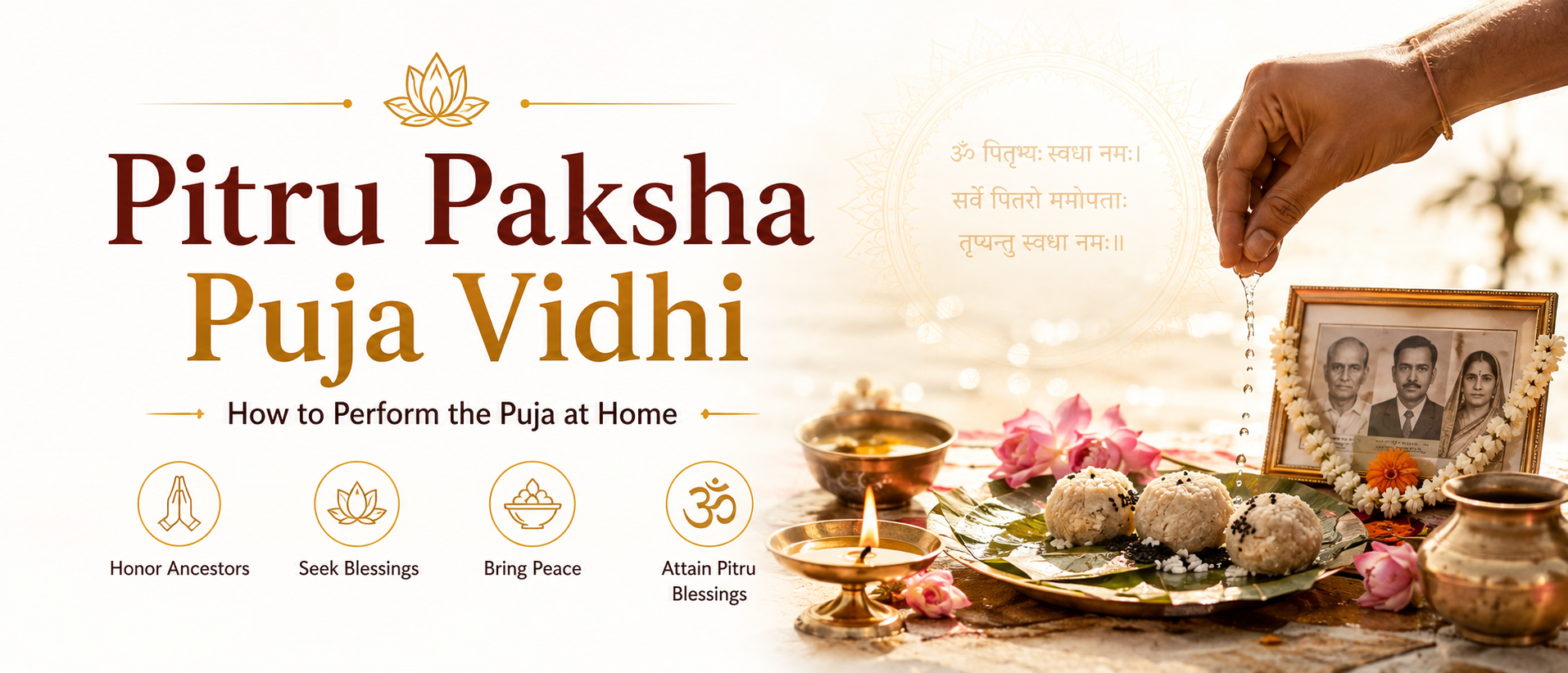
The Pitru Paksha puja vidhi at home is simple, and it can be performed with sincerity by any householder even without a priest. On the tithi corresponding to your ancestor’s passing, bathe early, prepare a clean space, make a sankalpa remembering the ancestors by name, offer water with black sesame, offer food before the family eats, and give in charity. This guide sets out the Pitru Paksha puja step by step, the mantras traditionally chanted, the items required, and what a family should do when the full Vedic ritual is not possible.
Before You Begin: Which Day and What Time
The Pitru Paksha puja is performed on the tithi corresponding to the day of the ancestor’s passing. If that tithi is unknown, the puja is performed on Sarva Pitru Amavasya, which falls on 10 October in 2026 and is valid for all ancestors, known and unknown.
Within the day, the Aparahna period, the afternoon portion, is traditionally preferred for ancestral rites, along with the Kutup and Rohina muhurtas. These vary by city and local sunrise, so confirm the window with your local panchang.
How to Do Pitru Paksha Puja at Home: Step by Step
Step 1: Bathe and prepare the space
Rise early and bathe. Clean the area where the ritual will be performed, and keep it simple and undecorated, as befits a solemn observance. Men traditionally wear clean unstitched cloth or simple traditional attire, and the sacred thread is worn over the right shoulder during ancestral rites in many traditions.
Step 2: Make the sankalpa
Sit facing south, the direction associated with the ancestors. Take water in your right hand and make a simple sankalpa, stating your name and gotra, and declaring your intention to perform this observance in gratitude and remembrance of your ancestors. Remember them by name where the names are known.
Step 3: Offer Tarpana
Pitru Paksha Tarpana is the offering of water to the ancestors. Water mixed with black sesame seeds, and where the tradition prescribes, kusha grass, is offered while remembering the ancestors. The exact mantras, the direction faced, and the sequence differ considerably across traditions, so follow the practice your family observes, or the guidance of a priest familiar with your lineage.
Step 4: Prepare and offer the food
Simple sattvic vegetarian food is prepared, traditionally including rice, dal, a vegetable preparation, and kheer or a sweet made with milk. A portion is set aside and offered in the name of the ancestors before the family eats. In many households the offering is placed on a leaf, and portions are set apart for the crow, the cow, and the dog as part of the same observance.
Step 5: Feed and give in charity
Feeding a Brahmin, a guest, or anyone in need on this day is considered central rather than optional. Anna Daan, the giving of food, along with the offering of clothing or other useful support, is held to reach the ancestors through the act of giving itself.
Step 6: Conclude with prayer
Complete the observance with a prayer for the peace of the departed, and for the wellbeing and wisdom of the living members of the family.
Pitru Paksha Mantra
Several mantras are traditionally chanted during ancestral rites. The most widely used is the Pitru Gayatri:
Om Devatabhyah Pitribhyashcha Mahayogibhya Eva Cha, Namah Swadhayai Swahayai Nityameva Namo Namah.
This offers salutations to the deities, to the ancestors, and to the great yogis, honouring the sacred utterances Swadha and Swaha through which offerings are made.
A simple invocation used while offering Tarpana is:
Om Pitru Devataabhyo Namah.
Many families also recite the Pitru Stotra or chant Om Namo Bhagavate Vasudevaya, since the Vishnu Purana associates the remembrance of Lord Vishnu with the peace of the departed. Where the complete Vedic procedure is not known, a person may still remember the ancestors respectfully, offer water, and perform charity rather than using unverified ritual instructions.
Pitru Paksha Puja Samagri
- Black sesame seeds (til) and clean water for Tarpana
- Kusha grass, where the family tradition prescribes it
- A copper or silver vessel for the water offering
- Banana leaf or plate for the food offering
- Cooked sattvic food: rice, dal, vegetable, and kheer or a milk sweet
- Ghee lamp, incense, and flowers
- A white cloth for the seat or offering place
- Items for daana: food grains, clothing, or other useful support
If You Cannot Perform the Full Ritual
Not every family has access to a priest familiar with their lineage, and not everyone knows the complete procedure. The tradition is not unkind on this point. A simple and sincere observance is considered complete: bathe, remember your ancestors by name, express gratitude in a simple sankalpa, offer water with black sesame, set aside food before the family eats, give food or support to someone in need, and close with a prayer for peace.
Where a detailed Vedic Shraddha ceremony is required, families generally seek a priest familiar with their regional and family tradition, since the mantras and sequence differ meaningfully between communities.
Frequently Asked Questions
How to do Pitru Paksha puja at home?
Bathe early, clean the space, sit facing south, make a sankalpa remembering the ancestors by name, offer Tarpana with water and black sesame, prepare simple sattvic food and offer a portion in their name before the family eats, feed someone in need, and close with a prayer for peace.
What is the Pitru Paksha mantra?
The Pitru Gayatri is the most widely chanted: Om Devatabhyah Pitribhyashcha Mahayogibhya Eva Cha, Namah Swadhayai Swahayai Nityameva Namo Namah. A simple invocation for Tarpana is Om Pitru Devataabhyo Namah.
Which direction should I face during Pitru Paksha puja?
South is the direction traditionally associated with the ancestors, and ancestral rites are performed facing south. In many traditions the sacred thread is also worn over the right shoulder during these rites.
Can Pitru Paksha puja be done without a priest?
Yes. A simple, sincere observance of remembrance, water offering, food offering, and charity is considered complete. A priest familiar with your family and regional tradition is sought when the full Vedic Shraddha ceremony with its specific mantras and sequence is required.
What food is offered during Pitru Paksha puja?
Simple sattvic vegetarian food, traditionally rice, dal, a vegetable preparation, and kheer or a milk sweet. A portion is offered in the name of the ancestors before the family eats, and portions are commonly set apart for the crow, cow, and dog.
What if I do not know my ancestor’s tithi?
Perform the puja on Sarva Pitru Amavasya, which falls on 10 October in 2026. This final day of Pitru Paksha is intended for the remembrance of all ancestors, both known and unknown.