

 1 November 2026
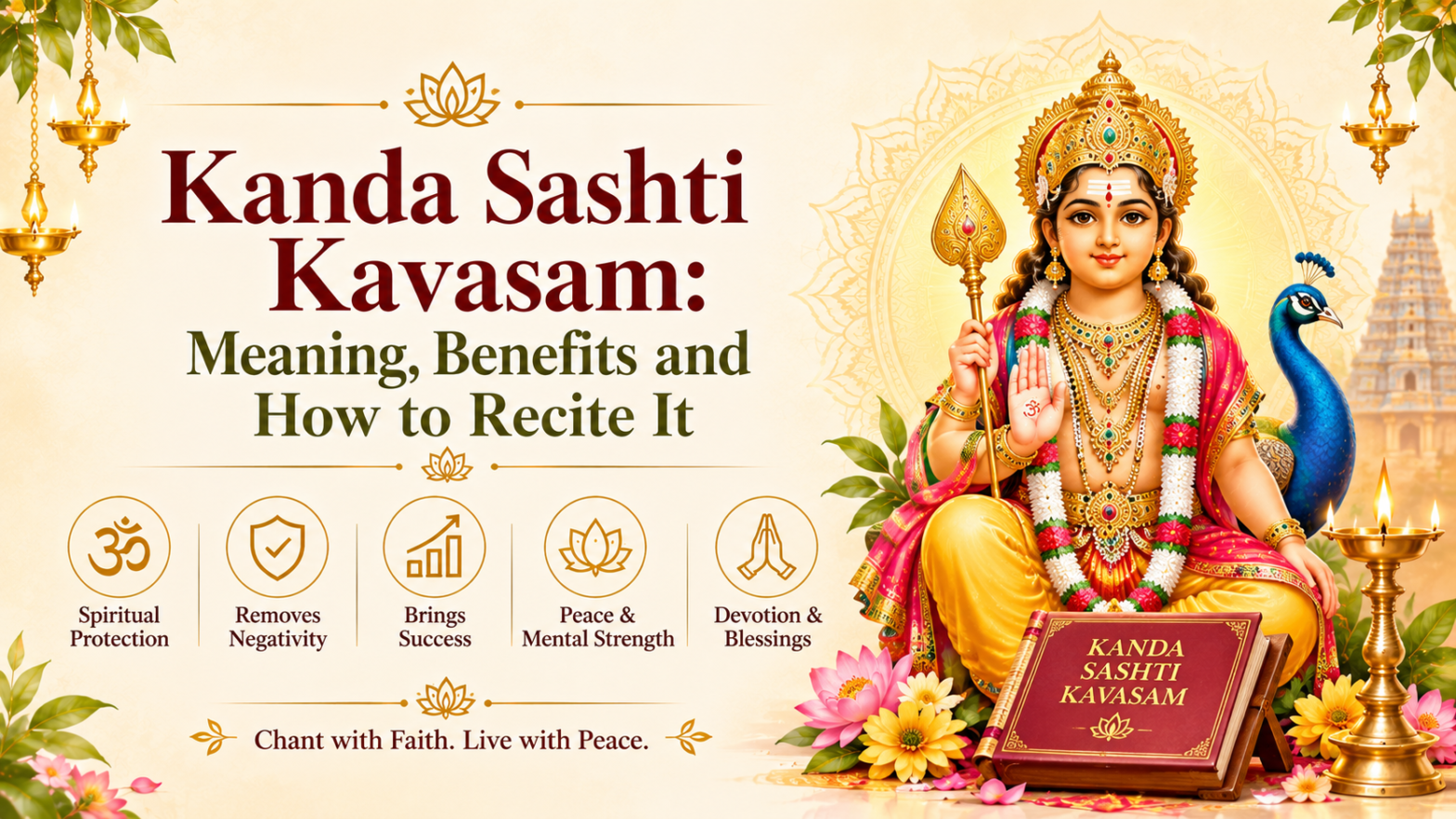
The Kanda Sashti Kavasam is a Tamil devotional hymn to Lord Murugan, composed by Devaraya Swamigal, in which the devotee asks Murugan to stand as armour over every part of the body and every part of life. Kavasam means armour, and that is exactly what the hymn is: a protective shield invoked through sound. It is recited daily in millions of Tamil homes, and with particular intensity during the six days of Kanda Sashti, which in 2026 run from 10 to 15 November. This guide explains what the Kavasam says, what it is believed to do, and how to recite it properly.
What Is the Kanda Sashti Kavasam?
The Kavasam is a hymn of protection addressed to Lord Murugan, also known as Skanda, Kartikeya and Subrahmanya. Its composer, Devaraya Swamigal, was a nineteenth century devotee of Murugan from Tamil Nadu, and he set down the hymn in simple, direct Tamil rather than in Sanskrit, which is a large part of why it travelled so widely among ordinary households.
Structurally it is a kavacha, a category of hymn found across Indian devotional literature in which the deity is invoked limb by limb to guard the body. What distinguishes this one is its urgency. The verses do not ask politely. They command, plead and insist, and the rhythm builds steadily until the final verses arrive almost at a run. Anyone who has heard it recited at speed in a temple will recognise that momentum.
What the Kavasam Actually Says
The hymn moves through a clear sequence, and knowing the sequence makes the recitation far more meaningful than treating it as sound alone.
The opening invocation
It begins by invoking Lord Ganesha, as almost all Tamil devotional recitation does, and then turns to Murugan, describing his Vel, his peacock and his rooster banner. The devotee establishes who is being addressed and in what form.
The limb by limb protection
This is the heart of the hymn and the reason it is called armour. Murugan is asked to protect the head, the forehead, the eyes, the ears, the nose, the mouth, the tongue, the throat, the shoulders, the chest, the stomach, the waist, the thighs, the knees, the feet, and so on through the entire body. Nothing is left uncovered. The devotee is, in effect, asking to be sealed.
Protection through the day and night
The hymn then extends the shield across time rather than anatomy, asking for protection while walking, while sleeping, while working, in all eight directions, at every hour.
The banishing verses
The most forceful section asks Murugan to drive away malevolent forces, illness, fear, the effects of ill intent and the influence of lower energies. These verses are delivered with real force in recitation, and they are the part devotees most associate with the hymn’s protective reputation.
The closing surrender
The hymn ends by placing the devotee entirely at Murugan’s feet, asking for his grace, and affirming that one who recites this Kavasam daily is held under his protection.
Benefits of Reciting the Kanda Sashti Kavasam
Devotees recite the Kavasam for the following reasons, as held in the tradition:
- Protection from harm, accident and unseen negative influence
- Relief from fear, anxiety and disturbed sleep
- Courage and clarity in facing difficulty, since Murugan is the commander of the divine forces
- Support during illness and recovery
- Removal of obstacles in work, study and family matters
- Steadiness of mind, which many devotees describe as the most immediate effect of daily recitation
A practical observation worth making honestly: a hymn recited daily at the same time, aloud, with attention, does something to a person’s state of mind regardless of what one believes about its metaphysics. The discipline and the concentration are real. Devotees who recite it consistently tend to speak less about dramatic outcomes and more about feeling steadier.
How to Recite the Kanda Sashti Kavasam
There are no complicated prerequisites. The tradition has always treated this hymn as available to everyone.
- Bathe before reciting where possible, and sit facing east or north
- Light a lamp before an image of Murugan or before his Vel
- Recite aloud rather than silently, since the hymn is built on rhythm and sound
- Keep the same time each day, most commonly early morning or at dusk
- Recite once daily as a regular practice, and more during the six days of Kanda Sashti
- Tuesdays and Sashti tithi are considered especially favourable
If you cannot read Tamil, listening attentively to a recorded recitation is accepted practice and is what a great many devotees do. The tradition does not treat this as a lesser form.
The Full Text
The complete Tamil text of the Kanda Sashti Kavasam, with transliteration and line by line meaning, is given below.
துதிப்போர்க்கு வல்வினை போம்; துன்பம்போம்; நெஞ்சில்
பதிப்போர்க்குச் செல்வம் பலித்துக்-கதித்தோங்கும்
நிஷ்டையும் கைகூடும், நிமலரருள் கந்தர்
சஷ்டி கவசம் தனை.
அமர ரிடர்தீர அமரம் புரிந்த
குமரனடி நெஞ்சே குறி.
சஷ்டியை நோக்கச் சரவண பவனார்
சிஷ்டருக் குதவும் செங்கதிர் வேலோன்
பாதம் இரண்டில் பன்மணிச் சதங்கை
கீதம் பாடக் கிண்கிணி யாட
மையல் நடனஞ்செய்யும் மயில்வா கனனார்
கையில் வேலால் எனைக் காக்கவென் றுவந்து
வரவர வேலா யுதனார் வருக
வருக வருக மயிலோன் வருக
இந்திரன் முதலா எண்டிசை போற்றி
மந்திர வடிவேல் வருக வருக!
வாசவன் மருகா வருக வருக
நேசக் குறமகள் நினைவோன் வருக
ஆறுமுகம் படைத்த ஐயா வருக
நீறிடும் வேலவன் நித்தம் வருக
சிரகிரி வேலவன் சீக்கிரம் வருக!
சரவண பவனார் சடுதியில் வருக
ரஹண பவச ர ர ர ர ர ர ர
ரிஹண பவச ரி ரி ரி ரி ரி ரி ரி
விநபவ சரஹண வீரா நமோநம
நிபவ சரஹண நிறநிற நிறென
வசர வணப வருக வருக
அசுரர் குடிகெடுத்த ஐயா வருக
என்னை ஆளும் இளையோன் கையில்
பன்னிரண் டாயுதம் பாசாங் குசமும்
பரந்த விழிகள் பன்னிரண் டிலங்க
விரைந்தெனைக் காக்க வேலோன் வருக
ஐயும் கிலியும் அடைவுடன் சவ்வும்
உய்யொளி சௌவும் உயிரையும் கிலியும்
கிலியுஞ் சௌவும் கிளரொளி யையும்
நிலைபெற் றென்முன் நித்தமும் ஒளிரும்
சண்முகன் நீயும் தனியொளி யொவ்வும்
குண்டலி யாம்சிவ குகன் தினம் வருக!
ஆறு முகமும் அணிமுடி ஆறும்
நீறிடு நெற்றியில் நீண்ட புருவமும்
பன்னிரு கண்ணும் பவளச்செவ் வாயும்
நன்னெறி நெற்றியில் நவமணிச் சுட்டியும்
ஈராறு செவியில் இலகுகுண் டலமும்
ஆறிரு திண்புயத் தழகிய மார்பில்
பல்பூ ஷணமும் பதக்கமும் தரித்து
நன்மணி பூண்ட நவரத்ன மாலையும்
முப்புரி நூலும் முத்தணி மார்பும்
செப்பழ குடைய திருவயி றுந்தியும்
துவண்ட மருங்கில் சுடரொளிப் பட்டும்
நவரத்தினம் பதித்த நற்சீ ராவும்
இருதொடை யழகும் இணைமுழந் தாளும்
திருவடி யதனில் சிலம்பொலி முழங்க
செககண செககண செககண செகண
மொகமொக மொகமொக மொகமொக மொகென
நகநக நகநக நகநக நகென
டிகுகுண டிகுடிகு டிகுகுண டிகுண
ரரரர ரரரர ரரரர ரரர
ரிரிரிரி ரிரிரிரி ரிரிரிரி ரிரிரி
டுடுடுடு டுடுடுடு டுடுடுடு டுடுடு
டகுடகு டிகுடிகு டங்கு டிங்குகு
விந்து விந்து மயிலோன் விந்து
முந்து முந்து முருகவேள் முந்து
என்றனை யாளும் ஏரகச் செல்வ
மைந்தன் வேண்டும் வரமகிழ்ந் துதவும்
லாலா லாலா லாலா வேசமும்
லீலா லீலா லீலா வினோ தனென்று
உன் திருவடியை உறுதியென் றெண்ணும்
எந்தலை வைத்துன் இணையடி காக்க
என்னுயிர்க் குயிராம் இறைவன் காக்க
பன்னிரு விழியால் பாலனைக் காக்க
அடியேன் வதனம் அழகுவேல் காக்க
பொடிபுனை நெற்றியைப் புனிதவேல் காக்க
கதிர்வேல் இரண்டும் கண்ணினைக் காக்க
விழி செவி இரண்டும் வேலவர் காக்க
நாசிகளி ரண்டும் நல்வேல் காக்க
பேசிய வாய்தனைப் பெருவேல் காக்க
முப்பத் திருபல் முனைவேல் காக்க
செப்பிய நாவைச் செவ்வேல் காக்க
கன்னமி ரண்டும் கதிர்வேல் காக்க
என்னிளங் கழுத்தை இனியவேல் காக்க
மார்பை ரத்ன வடிவேல் காக்க
சேரிள முலைமார் திருவேல் காக்க
வடிவே லிருதோள் வளம்பெறக் காக்க
பிடரிக ளிரண்டும் பெருவேல் காக்க
அழகுடன் முதுகை அருள்வேல் காக்க
பழுபதி னாறும் பருவேல் காக்க
வெற்றிவேல் வயிற்றை விளங்கவே காக்க
சிற்றிடை யழகுறச் செவ்வேல் காக்க
நாணாங் கயிற்றை நல்வேல் காக்க
ஆண் குறியிரண்டும் அயில்வேல் காக்க
பிட்ட மிரண்டும் பெருவேல் காக்க
வட்டக் குதத்தை வடிவேல் காக்க
பணைத் தொடை இரண்டும் பருவேல் காக்க
கணைக்கால் முழந்தாள் கதிர்வேல் காக்க
ஐவிரல் அடியினை அருள்வேல் காக்க
கைகளி ரண்டும் கருணைவேல் காக்க
முன்கையி ரண்டும் முரண்வேல் காக்க
பின்கையி ரண்டும் பின்னவள் இருக்க
நாவில் சரஸ்வதி நற்றுணை யாக
நாபிக் கமலம் நல்வேல் காக்க
முப்பால் நாடியை முனைவேல் காக்க
எப்பொழு தும்எனை எதிர்வேல் காக்க
அடியேன் வசனம் அசைவுள நேரம்
கடுகவே வந்து கனகவேல் காக்க
வரும்பகல் தன்னில் வச்சிரவேல் காக்க
அரையிருள் தன்னில் அனையவேல் காக்க
ஏமத்தில் சாமத்தில் எதிர்வேல் காக்க
தாமதம் நீக்கிச் சதுர்வேல் காக்க
காக்க காக்க கனகவேல் காக்க
நோக்க நோக்க நொடியில் நோக்க
தாக்க தாக்க தடையறக் தாக்க
பார்க்க பார்க்க பாவம் பொடிபட
பில்லி சூனியம் பெரும்பகை அகல
வல்ல பூதம் வலாட்டிகப் பேய்கள்
அல்லற் படுத்தும் அடங்கா முனியும்
பிள்ளைகள் தின்னும் புழக்கடை முனியும்
கொள்ளிவாய்ப் பேய்களும், குறளைப் பேய்களும்
பெண்களைத் தொடரும் பிரமராட் சதரும்
அடியனைக் கண்டால் அலறிக் கலங்கிட
இரிசு காட்டேரி இத்துன்ப சேனையும்
எல்லிலும் இருட்டிலும் எதிர்ப்படும் அண்ணரும்
கனபூசை கொள்ளும் காளியோ டனைவரும்
விட்டாங் காரரும் மிகுபல பேய்களும்
தண்டியக் காரரும் சண்டாளர் களும்
என்பெயர் சொல்லவும் இடிவிழுந் தோடிட
ஆனை யடியினில் அரும்பா வைகளும்
பூனை மயிரும் பிள்ளைகள் என்பும்
நகமும் மயிரும் நீள்முடி மண்டையும்
பாவைக ளுடனே பலகல சத்துடன்
மனையிற் புதைத்த வஞ்சனை தனையும்
ஒட்டியச் செருக்கும் ஒட்டிய பாவையும்
காசும் பணமும் காவுடன் சோறும்
ஓதும் அஞ்சனமும் ஒருவழிப் போக்கும்
அடியனைக் கண்டால் அலைந்து குலைந்திட
மாற்றார் வஞ்சகர் வந்து வணங்கிட
காலதூ தாளெனைக் கண்டாற் கலங்கிட
அஞ்சி நடுங்கிட அரண்டு புரண்டிட
வாய்விட் டலறி மதிகெட் டோட
படியினில் முட்ட பாசக் கயிற்றால்
கட்டுடன் அங்கம் கதறிடக் கட்டு
கட்டி உருட்டு கைகால் முறிய
கட்டு கட்டு கதறிடக் கட்டு
முட்டு முட்டு முழிகள் பிதுங்கிட
செக்கு செக்கு செதில் செதிலாக
சொக்கு சொக்கு சூர்ப்பகைச் சொக்கு
குத்து குத்து கூர்வடி வேலால்
பற்று பற்று பகலவன் தணலெரி
தணலெரி தணலெரி தணலது வாக
விடு விடு வேலை வெகுண்டது வோடப்
புலியும் நரியும் புன்னரி நாயும்
எலியும் கரடியும் இனித் தொடர்ந் தோட
தேளும் பாம்பும் செய்யான் பூரான்
கடிவிட விஷங்கள் கடித்துய ரங்கம்
ஏறிய விஷங்கள் எளிதுடன் இறங்க
ஒளிப்புஞ் சுளுக்கும் ஒருதலை நோயும்
வாதஞ் சயித்தியம் வலிப்புப் பித்தம்
சூலைசயங் குன்மம் சொக்குச் சிரங்கு
குடைச்சல் சிலந்தி குடல்விப் பிரிதி
பக்கப் பிளவை படர்தொடை வாழை
கடுவன் படுவன் கைத்தாள் சிலந்தி
பற்குத் தரணை பருஅரை யாப்பும்
எல்லாப் பிணியும் என்றனைக் கண்டால்
நில்லா தோட நீஎனக் கருள்வாய்
ஈரேழு உலகமும் எனக் குறவாக
ஆணும் பெண்ணும் அனைவரும் எனக்கா
மண்ணா ளரசரும் மகிழ்ந்துற வாகவும்
உன்னைத் துதிக்க உன் திரு நாமம்
சரவண பவனே சைலொளி பவனே
திரிபுர பவனே திகழொளி பவனே
பரிபுர பவனே பவமொளி பவனே
அரிதிரு மருகா அமரா வதியைக்
காத்துத் தேவர்கள் கடும்சிறை விடுத்தாய்
கந்தா குகனே கதிர்வே லவனே
கார்த்திகை மைந்தா கடம்பா கடம்பனை
இடும்பனை யழித்த இனியவேல் முருகா
தனிகா சலனே சங்கரன் புதல்வா
கதிர்கா மத்துறை கதிர்வேல் முருகா
பழநிப் பதிவாழ் பாலகு மாரா
ஆவினன் குடிவாழ் அழகிய வேலா
செந்தின்மா மலையுறும் செங்கல்வ ராயா
சமரா புரிவாழ் சண்முகத் தரசே
காரார் குழலாள் கலைமகள் நன்றாய்
என்நா இருக்க யானுனைப் பாட
எனைத் தொடர்ந்திருக்கும் எந்தை முருகனைப்
பாடினேன் ஆடினேன் பரவச மாக
ஆடினேன் நாடினென் ஆவினன் பூதியை
நேச முடன்யான் நெற்றியில் அணிய
பாச வினைகள் பற்றது நீங்கி
உன்பதம் பெறவே உன்னரு ளாக
அன்புடன் இரட்சி அன்னமுஞ் சொன்னமும்
மெத்தமெத் தாக வேலா யுதனார்
சித்திபெற் றடியேன் சிறப்புடன் வாழ்க
வாழ்க வாழ்க மயிலோன் வாழ்க
வாழ்க வாழ்க வடிவேல் வாழ்க
வாழ்க வாழ்க மலைக்குரு வாழ்க
வாழ்க வாழ்க மலைக்குற மகளுடன்
வாழ்க வாழ்க வாரணத் துவசம்
வாழ்க வாழ்கஎன் வறுமைகள் நீங்க
எத்தனை குறைகள் எத்தனை பிழைகள்
எத்தனை அடியேன் எத்தனை செயினும்
பெற்றவன் நீகுரு பொறுப்பது உன்கடன்
பெற்றவள் குறமகள் பெற்றவ ளாமே
பிள்ளையென் றன்பாய்ப் பிரிய மளித்து
மைந்தனென் மீதுன் மனமகிழ்ந் தருளித்
தஞ்சமென் றடியார் தழைத்திட அருள்செய்
கந்தர் சஷ்டி கவசம் விரும்பிய
பாலன் தேவ ராயன் பகர்ந்ததைக்
காலையில் மாலையில் கருத்துடன் நாளும்
ஆசா ரத்துடன் அங்கந் துலக்கி
நேசமுடன் ஒரு நினைவது வாகிக்
கந்தர் சஷ்டிக் கவசம் இதனைச்
சிந்தை கலங்காது தியானிப் பவர்கள்
ஒருநாள் முப்பத் தாறுருக் கொண்டு
ஓதியே ஜெபித்து உகந்துநீ றணிய
அஷ்டதிக் குள்ளோர் அடங்கலும் வசமாய்த்
திசைமன்ன ரெண்மர் செயலாது அருளுவர்
மாற்றவ ரல்லாம் வந்து வணங்குவர்
நவகோள் மகிழ்ந்து நன்மை யளித்திடும்
நவமதனெனவும் நல்லெழில் பெறுவர்
எந்த நாளும் ஈரெட்டாய் வாழ்வார்
கந்தர்கை வேலாம் கவசத் தடியை
வழியாய்க் காண மெய்யாய் விளங்கும்
விழியாற் காண வெருண்டிடும் பேய்கள்
பொல்லா தவரைப் பொடிபொடி யாக்கும்
நல்லோர் நினைவில் நடனம் புரியும்
சர்வ சத்ரு சங்கா ரத்தடி
அறிந்தென துள்ளம் அஷ்ட லட்சுமிகளில்
வீரலட் சுமிக்கு விருந்துண வாகச்
சூரபத் மாவைத் துணித்தகை யதனால்
இருபத் தேழ்வர்க் குவந்தமு தளித்த
குருபரன் பழநிக் குன்றினி லிருக்கும்
சின்னக் குழந்தை சேவடி போற்றி!
எனைத்தடுத் தாட்கொள என்றன துள்ளம்
மேவிய வடிவுறும் வேலவா போற்றி!
தேவர்கள் சேனா பதியே போற்றி!
குறமகள் மனமகிழ் கோவே போற்றி!
திறமிகு திவ்விய தேகா போற்றி!
இடும்பா யுதனே இடும்பா போற்றி!
கடம்பா போற்றி கந்தா போற்றி!
வெட்சி புனையும் வேலே போற்றி!
உயர்கிரி கனக சபைக்கோ ரரசே!
மயில்நட மிடுவோய் மலரடி சரணம்!
சரணம் சரணம் சரவண பவஓம்
சரணம் சரணம் சண்முகா சரணம்!
சரணம் சரணம் சண்முகா சரணம்!
Kanda Sashti Kavasam During the Six Day Vratam
During Kanda Sashti, which falls from 10 to 15 November in 2026, the Kavasam takes on a particular role. Devotees keeping the vratam recite it each morning and evening across the six days, and group recitation is organised at Murugan temples, often led by volunteers and repeated many times over. The sixth day, Soorasamharam on 15 November, is when the recitation reaches its peak, since the hymn’s banishing verses echo the very event being commemorated: Murugan’s victory over Surapadman.
Frequently Asked Questions
What is the Kanda Sashti Kavasam?
It is a Tamil hymn of protection addressed to Lord Murugan, composed by Devaraya Swamigal. Kavasam means armour, and the hymn asks Murugan to guard every part of the devotee’s body and life. It is among the most widely recited devotional hymns in Tamil Nadu.
Who wrote the Kanda Sashti Kavasam?
Devaraya Swamigal, a nineteenth century Tamil devotee of Lord Murugan, is traditionally credited as its composer. He wrote it in plain Tamil rather than Sanskrit, which helped it spread into ordinary households.
What are the benefits of reciting it?
Devotees recite it for protection from harm and negative influence, relief from fear and anxiety, courage in difficulty, support during illness, removal of obstacles, and steadiness of mind. Regular daily recitation is the practice most associated with these results.
When should the Kanda Sashti Kavasam be recited?
It may be recited daily, most commonly in the early morning or at dusk, after bathing and before a lamp. Tuesdays and Sashti tithi are considered especially favourable, and recitation intensifies during the six days of Kanda Sashti.
Can I listen instead of reciting if I do not read Tamil?
Yes. Listening attentively to a recitation is accepted practice in the tradition and is what many devotees do. Reciting aloud is preferred where possible, since the hymn is built on rhythm and sound.
How many times should it be recited?
Once daily is the standard practice. During Kanda Sashti many devotees recite it morning and evening, and temple groups recite it repeatedly through the six days.